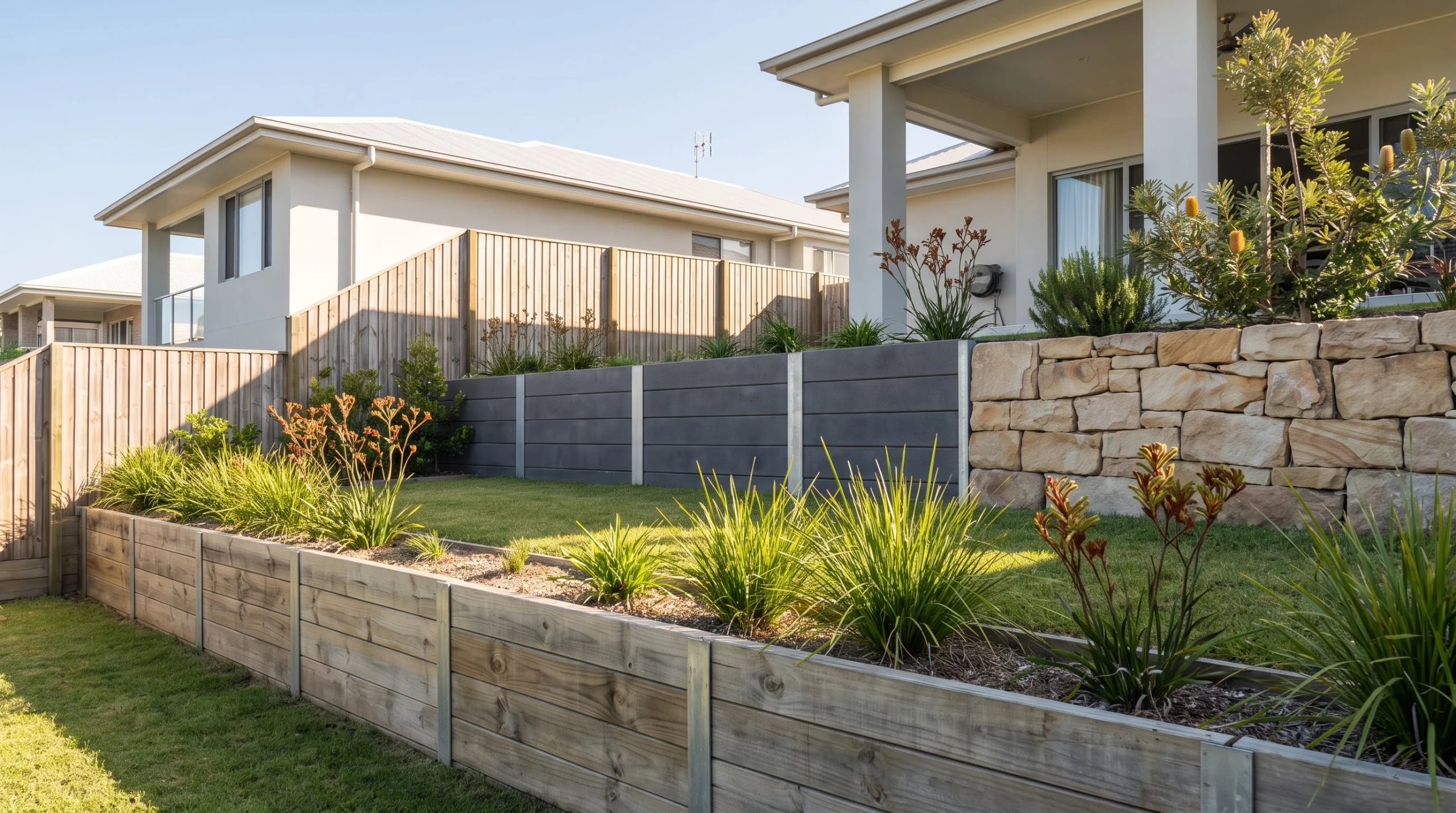
Do you need retaining wall council approval? Yes, get it wrong and you could face fines, forced demolition, or costly re-builds. Get it right and your project runs smoothly from start to finish.
Retaining wall council approval on the Gold Coast is something that trips up a lot of homeowners, builders, and developers every year. The rules around height limits, engineering requirements, and development approvals can feel complicated, but they don’t have to be.
This guide breaks it all down so you know exactly where you stand before work begins.
Why Council Approval Matters for Retaining Walls
A retaining wall does a lot of heavy lifting. It holds back soil, manages water runoff, and keeps slopes stable. Done properly, it protects your property and your neighbours’ properties too.
That’s exactly why local councils take retaining walls seriously. A wall that fails can cause significant damage, from flooding and erosion to property movement and structural collapse.
On the Gold Coast, the City of Gold Coast Council sets out clear rules about when retaining walls need approval and what standards they must meet. These rules exist to protect people, not to make your life difficult.
When Do You need Retaining Wall Council Approval?
Not every retaining wall requires a development approval (DA). In Queensland, retaining walls that meet certain criteria are considered “accepted development” and can be built without formal approval.
Here’s a general guide to when approval is and isn’t required:
| Wall Height | Approval Required? |
|---|---|
| Under 1 metre | Generally not required |
| 1 metre to under 1.5 metres | May require building approval depending on conditions |
| 1.5 metres and over | Building approval required in most cases |
| Over 1 metre near a boundary or surcharge | Engineering and approval likely required |
Keep in mind these are general thresholds. Your specific site conditions, slope, soil type, and proximity to boundaries can all affect what’s required.
It’s always worth checking with the Gold Coast City Council or a licensed building certifier before you start.
Queensland Building Regulations You Need to Know
In Queensland, retaining walls are regulated under the Building Act 1975 and the Queensland Development Code. These rules determine when a building approval is needed and what standards must be met.
Key points include:
- Retaining walls over 1 metre in height typically require a building approval from a private building certifier or council
- Walls near property boundaries may need approval regardless of height
- If a wall supports an additional load, such as a driveway, shed, or another structure, engineering is required
- Walls built in stages to avoid approval thresholds are not permitted and can be treated as a single structure
For the most up-to-date requirements, you can refer directly to the Queensland Development Code, which outlines the technical standards for building work across the state.
The Role of a Structural Engineer
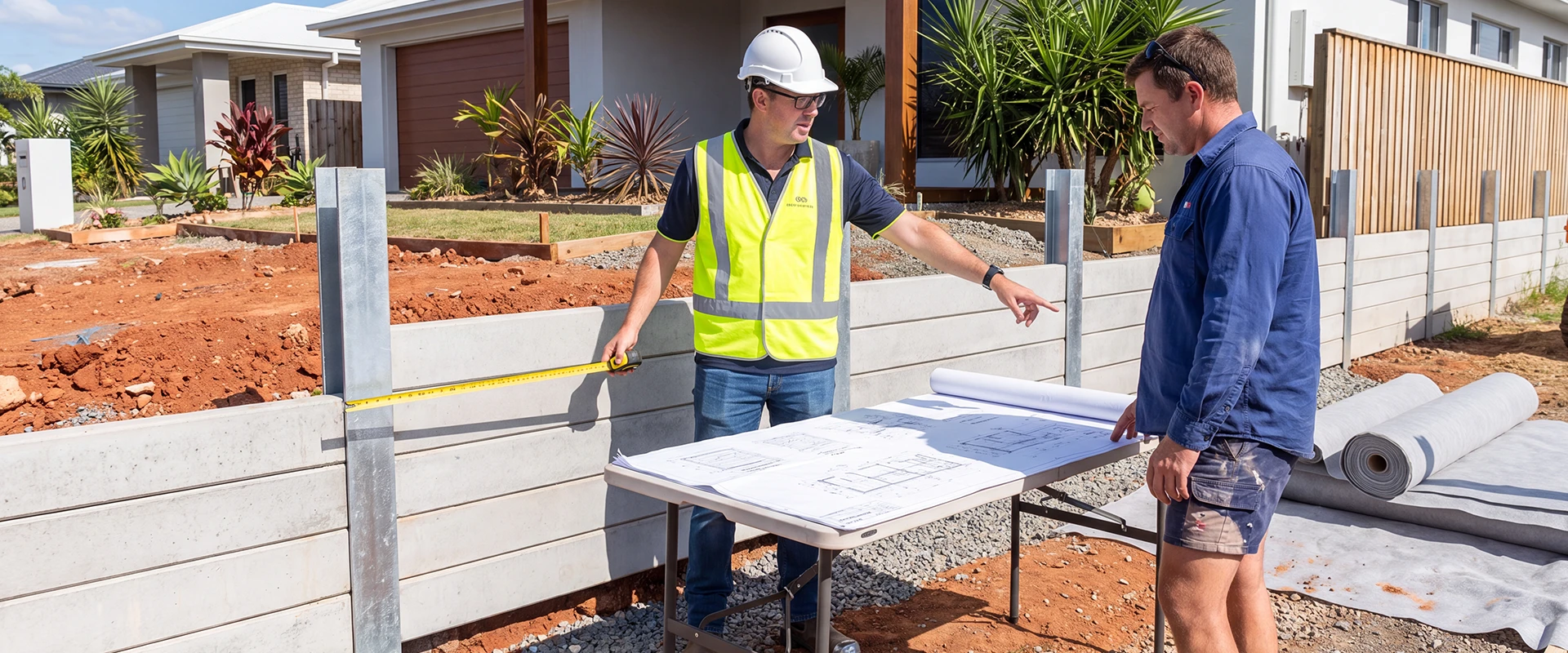
Once your retaining wall reaches a certain height or complexity, you’ll need an engineer involved. This isn’t optional and it’s not just a formality.
A structural engineer assesses:
- Soil conditions and bearing capacity
- Lateral earth pressure on the wall
- Drainage requirements behind the wall
- Footing depth and reinforcement needs
- Whether the wall can safely support nearby loads
In Robina, Helensvale, and Palm Beach, where sloped blocks are common, engineered retaining walls are the norm rather than the exception. If your wall is over 1 metre or sits near a boundary, budget for engineering from the start.
What an Engineer’s Report Covers
An engineer’s report for a retaining wall typically includes:
- Site-specific design drawings
- Material specifications
- Footing details
- Drainage layout
- Certification that the design meets Australian Standards
This report forms part of your building approval application and is reviewed by your building certifier.
How to Apply for Retaining Wall Approval
The approval process on the Gold Coast generally works like this:
- Confirm whether your wall requires approval (check height, location, and site conditions)
- Engage a structural engineer if required
- Prepare plans and documentation
- Submit to a private building certifier or the council
- Receive your approval before work begins
- Build to the approved design
- Arrange a final inspection if required
Most straightforward retaining wall approvals are handled by private building certifiers, which can be faster than going through council directly.
For complex sites involving significant earthworks or walls near waterways, a development application through Gold Coast City Council may be required.
Drainage: A Critical Part of Compliance
One of the most overlooked parts of retaining wall approval is drainage. Poor drainage behind a wall is one of the leading causes of retaining wall failure in Queensland.
Your approved design will need to account for:
- Ag pipe or slotted drainage pipe behind the wall
- Gravel backfill to allow water to move freely
- Weep holes to relieve hydrostatic pressure
- Correct drainage outlet points that don’t direct water onto neighbouring properties
In areas like Burleigh Heads and Surfers Paradise, where blocks are often tightly spaced and rainfall can be intense, drainage planning is especially important.
You can find useful information on managing drainage and earthworks in residential settings through Queensland Building and Construction Commission (QBCC) resources, which covers licensing requirements and consumer protection for building work in Queensland.
Common Mistakes to Avoid
A lot of retaining wall headaches come down to the same handful of mistakes. Here’s what to watch out for:
- Starting work without checking approval requirements
- Building a wall in stages to stay under height thresholds
- Ignoring drainage until after the wall is built
- Using materials not suited to the site conditions
- Not notifying neighbours when work affects a shared boundary
If a wall is built without required approvals, council can issue a show cause notice and require you to demolish and rebuild it. That’s an expensive lesson nobody wants to learn.
DIY vs Professional Retaining Wall Construction
For smaller walls under 1 metre that don’t require approval, some homeowners tackle the job themselves. For anything larger or more complex, professional installation is strongly recommended.
| Factor | DIY | Professional |
|---|---|---|
| Council approval assistance | No | Yes |
| Engineering coordination | No | Yes |
| Correct drainage installation | Variable | Yes |
| Warranty and insurance | No | Yes |
| Compliance with Australian Standards | Variable | Yes |
If you’re unsure whether your project needs professional help, that’s usually a sign that it does. At Goldie Retaining Walls, this is what we do every day. We handle everything from initial advice through to approved, engineered, and fully compliant retaining walls across the Gold Coast.
Retaining Walls and Neighbours: What You Need to Know
If your retaining wall sits on or near a boundary, your neighbour’s interests come into the picture. In Queensland, the Neighbourhood Disputes (Dividing Fences and Trees) Act 2011 covers fencing, but retaining walls involve separate considerations under planning and building law.
As a general rule:
- You should notify neighbours before starting work near a shared boundary
- Your wall must not increase water runoff onto neighbouring land
- If the wall is required to support both properties, costs may be shared
Getting legal or professional advice before you start can save significant disputes later.
Frequently Asked Questions
Do I need council approval for a retaining wall in Gold Coast?
It depends on the height and location of the wall. Walls under 1 metre generally don’t need approval, but taller walls, walls near boundaries, or walls supporting additional loads typically require building approval and may need engineering certification.
How tall can a retaining wall be without a permit in Queensland?
In most cases, a retaining wall under 1 metre in height can be built without a building permit. Once a wall reaches 1 metre or more, building approval is generally required. Always check with a building certifier for your specific site.
Who approves retaining wall plans on the Gold Coast?
Building approval is typically handled by a private building certifier rather than the council directly. For more complex projects involving development applications, Gold Coast City Council may be involved.
Does a retaining wall need an engineer?
Any wall over 1 metre in height, or walls subject to surcharge loads such as a driveway or structure, will typically require a structural engineer to design and certify the wall.
How much does retaining wall approval cost on the Gold Coast?
Costs vary depending on the complexity of the project. A building certifier fee, engineer’s report, and council fees (if applicable) are all separate costs. For a ballpark figure, speak to a building certifier or a retaining wall specialist early in your planning.
Can I build a retaining wall on a boundary without permission?
Generally no. Walls built on or close to a boundary require care around neighbour notification, water management, and compliance with local planning rules. Always seek professional advice before building on a boundary.
Get Your Retaining Wall Right from the Start
Retaining wall council approval on the Gold Coast doesn’t have to be a headache. With the right advice and a clear plan, most projects move through the process smoothly.
The key is to understand what’s required before you start, not after. Know your wall height, your site conditions, your drainage needs, and whether engineering is required. Then get the right professionals involved early.
If you’re planning a retaining wall in Southport, Palm Beach, Helensvale, Robina, or anywhere across the Gold Coast, Goldie Retaining Walls is here to help. We handle design, engineering coordination, approvals, and construction so you don’t have to manage it all yourself.
Not sure where to start? Check out our guide on retaining wall costs and materials to understand what’s involved before you commit to a design.
Request a free quote today and speak with a local retaining wall specialist who knows the Gold Coast inside and out.