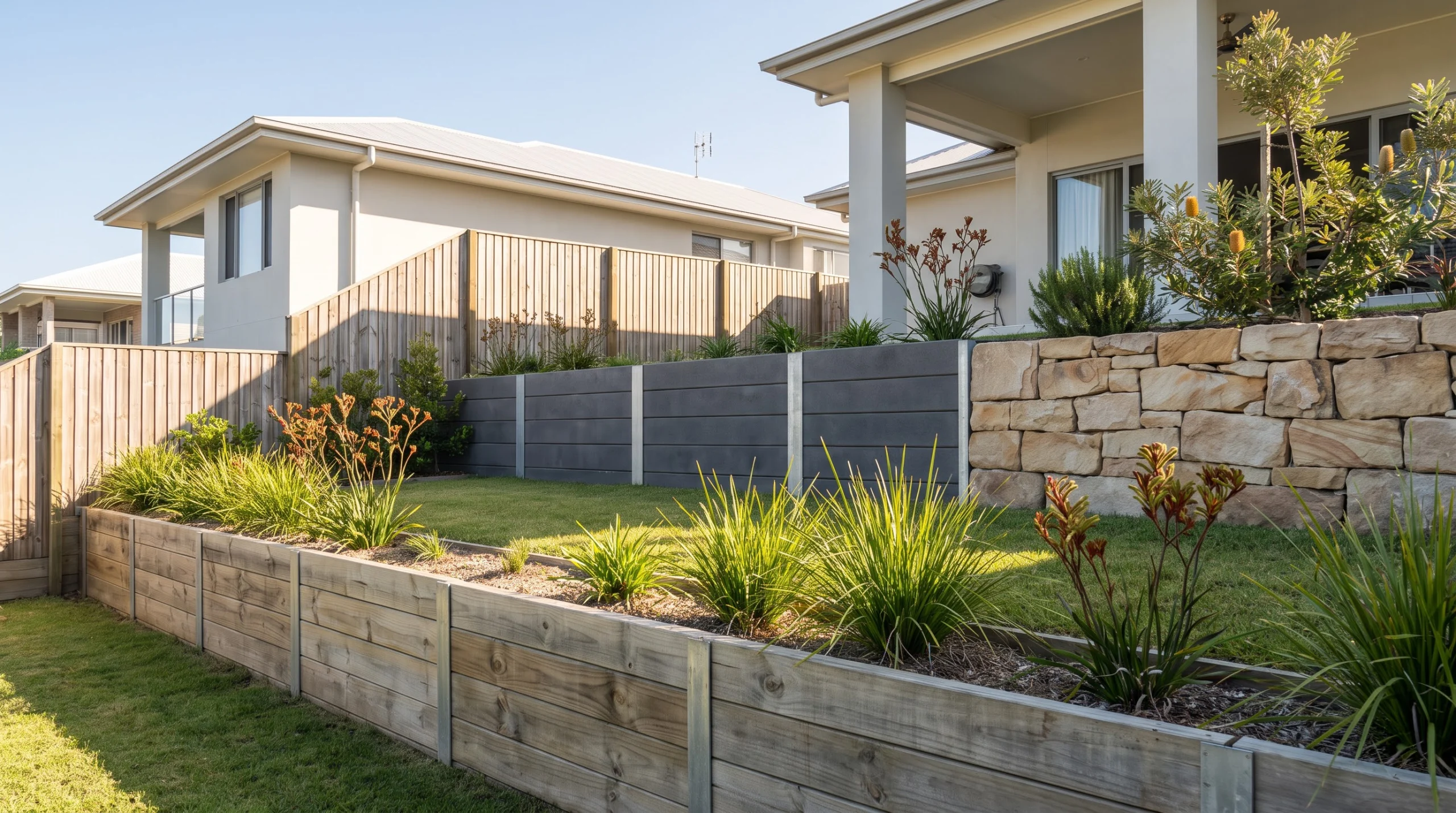
You have probably looked at the retaining wall in your backyard and wondered whether it is good for another twenty years or quietly heading towards trouble. It is one of the most common questions we hear from Gold Coast homeowners, so let’s answer it properly. How long do retaining walls last depends on several factors, and the material, the way water is handled and the quality of the build matter far more than any single number you will find online.
Here on the Gold Coast, humid summers, extreme weather and reactive clay soil conditions all put extra strain on a wall. One that might last for decades in a dry climate can age faster here if it was not built to cope. Below is a practical guide to lifespan by material, what shortens or extends it, and how to tell when it is time to call someone in.
Lifespan of Common Types of Retaining Walls
Before the numbers, one honest point: these are general estimates, not guarantees. Two walls constructed using the same product can differ widely in durability depending on soil, water and workmanship. Treat the figures below as ballpark ranges for the most popular retaining wall materials, not expiry dates.
| Material | Estimated lifespan | Notes |
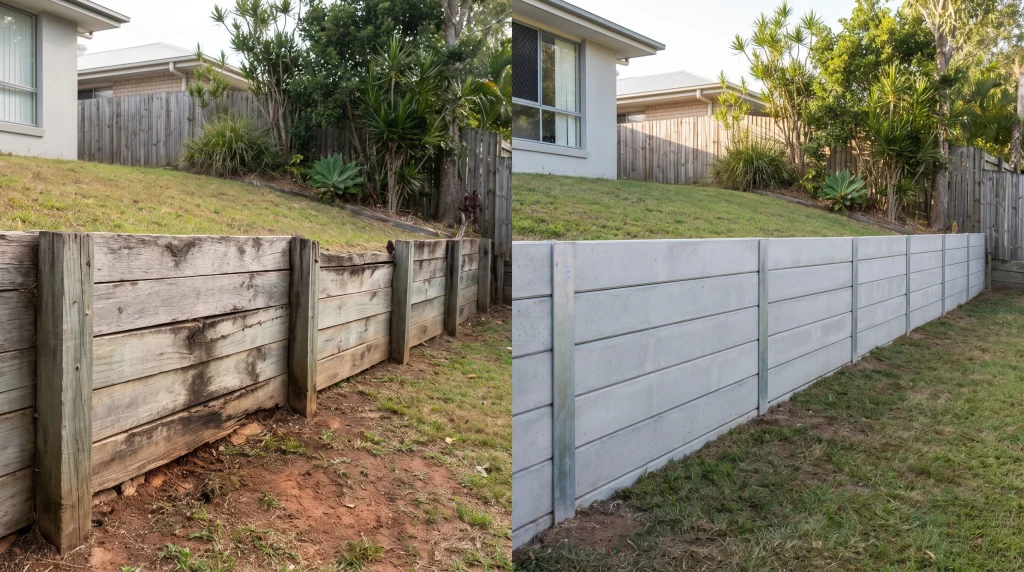
| Treated timber or hardwood | Around 10 to 20 years | Shortest-lived option. Can rot and warp in our climate. |
| Concrete sleeper | Several decades | Steel posts are the limiting factor; galvanised ones hold up better. |
| Concrete blocks or masonry | 50 years or more | Long-lasting when reinforcement and water management are done well. |
| Natural stone, including sandstone | Many decades | Durable and low-maintenance when properly built. |
| Gabion walls (rock-filled baskets) | Decades | Engineered mesh is designed for a long service life. |
Every option has a functional purpose first: to hold back soil on a slope, prevent soil erosion and give you a level, usable outdoor space. Looks come second, although natural stone and a neat block retaining wall are both aesthetically pleasing and can enhance the aesthetic appeal of your landscape.
If you are weighing up retaining wall options for a new build or a replacement, our guide comparing a concrete sleeper or timber retaining wall walks through where each one suits a Gold Coast block.
Factors That Affect the Lifespan of a Retaining Wall
A wall is only as good as what you cannot see. The materials used, the footings, how well the builder managed to compact the fill and the drainage system all matter more than the face you look at. We have pulled out timber walls that were still sound after 20 years and concrete walls that failed in under ten, simply because one had somewhere for the water to go and the other did not.
Poor Drainage and Water Build-Up
Water is the single biggest factor in the longevity of a retaining wall. When it cannot escape, it builds up in the soil and the pressure on the wall climbs with every downpour, which is what causes most leaning and bulging. Blocked weep holes and missing gravel backfill behind the wall are the usual culprits. Effective drainage is worth its own read, so here is what proper drainage actually involves.
Rot, Pests and Corrosion
Wood faces two enemies in Queensland: moisture-driven rot and termite activity. A timber sleeper rated for in-ground use holds up far better than untreated wood, but nothing organic survives forever in constant contact with damp soil. Sleeper walls rely on steel uprights, which can corrode over many years if they sit wet. Reinforced block and masonry walls can suffer water damage too, when moisture reaches the steel inside and it rusts, sometimes called concrete cancer.
Wall Height and Soil Pressure
Wall height changes everything. Soil pressure rises quickly as a wall gets taller, so a low edge around garden beds or a landscape feature has a far easier life than a wall holding up a driveway. On steep blocks, splitting one tall wall into a second tier often reduces the load on each. In Queensland, a wall more than 1 metre high, or one carrying extra load such as a driveway or a building close by, generally needs building approval and an engineer’s design, so check with your local council before you start. That is also why a DIY retaining wall is best kept small.
How to Maximise Your Wall’s Durability
Proper installation sets the ceiling, and regular maintenance decides how close you get to it. A few simple habits add years:
– Keep weep holes clear and direct water from downpipes and paths away from the wall.
– After heavy rain, check that water is getting away freely and not pooling behind the wall.
– Walk the wall a couple of times a year, and again after a big storm.
– Deal with small cracks or minor movement early, before they become structural.
– Keep soil and mulch topped up at the top and ends of the wall, so you are preventing erosion where it usually starts.
Even products sold as needing minimal maintenance benefit from this sort of upkeep. Solid groundwork matters as much as the wall itself, and our piece on retaining wall footings and what can go wrong explains why.
Early Signs of Retaining Wall Failure
Walls rarely fail without warning. Keep an eye out for leaning or tilting, cracking, bulging in the middle, soil sinking at the top, or white powdery staining on the face. Any gap opening up between the wall and the ground it holds is also worth a closer look. None of these mean instant collapse, but they are your wall telling you something needs attention.
Should You Repair or Replace a Retaining Wall?
As a rough rule, blocked drains, minor leaning, a few loose blocks and surface damage can often be repaired. Severe bowing, widespread rot or insect damage, and walls that have moved badly usually point towards a new retaining wall. The honest answer depends on what is happening beneath the surface, which is why patching over a failing base rarely ends well. If yours has started to lean, our guide on how to fix a leaning retaining wall covers the repair options and roughly what they cost.
When a Professional Inspection Makes Sense
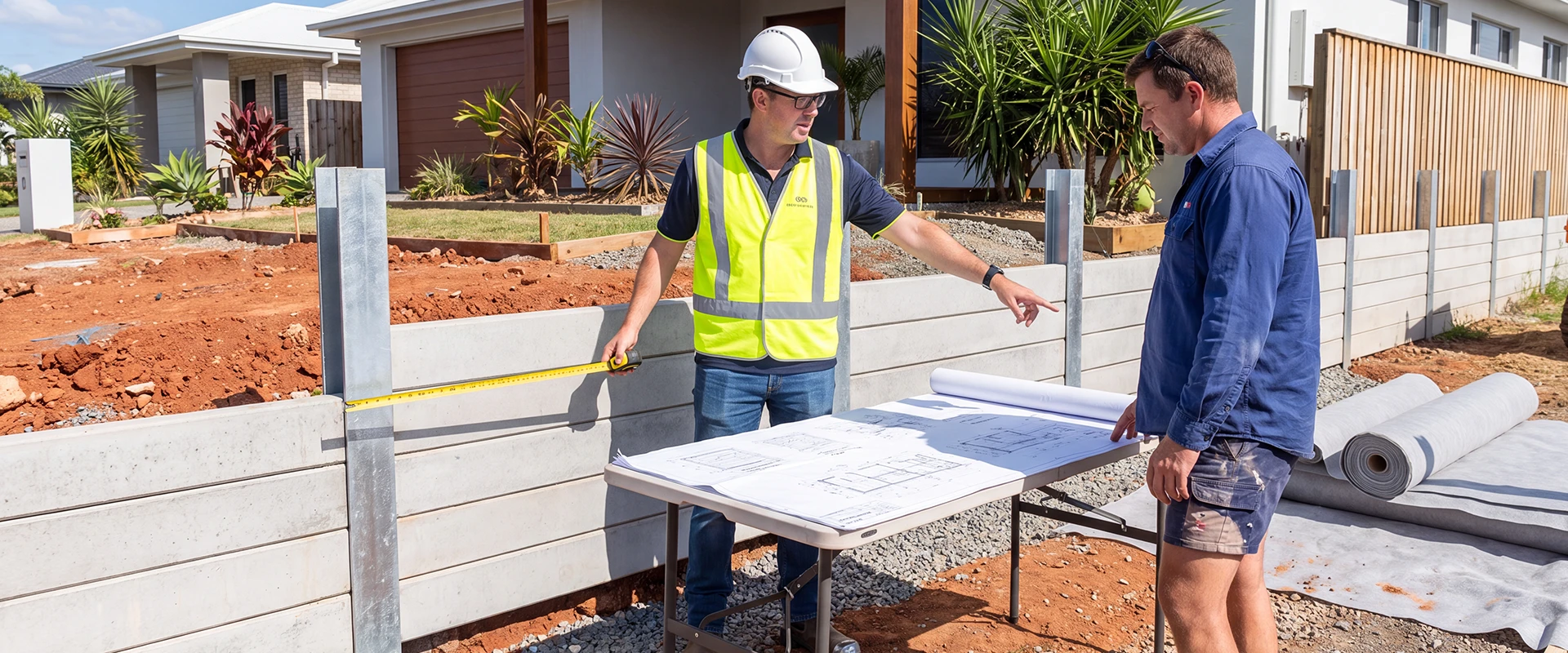
If your wall is tall, showing structural movement, or you simply are not sure how serious it is, it is worth getting eyes on it from someone who does this every day. That is what we do at Goldie Retaining Walls, and we would always rather take a quick look than see a small problem turn into a full rebuild. An inspection also stops you spending money on a repair when a replacement is the smarter long-term investment, and it is the best starting point for any retaining wall project from Coomera to Burleigh.
Frequently Asked Questions
How long does a wooden wall last on the Gold Coast?
As a general estimate, around 10 to 20 years. Hardwood and quality in-ground treated pine sit at the upper end, and proper maintenance can push that further. Humidity and insects shorten the life of wood here compared with drier parts of the country.
Do concrete sleeper retaining walls outlast timber?
Generally yes. They typically go for several decades, with the posts usually the first thing to wear out. For most people they offer a longer life with far less work.
Which wall type lasts the longest?
Reinforced block and natural stone generally top the list for longevity. With sound reinforcement and somewhere for water to go, a wall can last 50 years or more.
Can you extend the life of an existing wall?
Often you can. Keeping water outlets clear, directing water away and fixing small issues early are the simplest ways.
How do you know if a wall needs replacing, not repairing?
If the damage is limited to blocked drains, surface cracks or minor movement, repair is usually possible. Widespread rot, serious leaning or structural movement generally means replacement is better value in the long run.
The Bottom Line
How long your wall lasts comes down to factors like the material, the build quality and above all the drainage. Wood sits at the shorter end, while concrete retaining walls, block and stone can serve for decades when they are built and maintained well. If you are unsure where yours stands, or you are planning one that you want to go the distance, get in touch with Goldie Retaining Walls for a straightforward assessment and a no-pressure quote.