The retaining wall is built, the site is clean, and you’re standing in your backyard looking at freshly compacted soil and a structure that still smells like new timber or concrete. It looks great structurally, but the landscape around it needs work before it becomes the outdoor space you had in mind. What happens in the weeks after a retaining wall on the Gold Coast is completed is where the real transformation takes place. Getting the landscaping sequence right makes a significant difference to how the finished space looks and how well it performs on Gold Coast properties for years to come.
Let the Ground Settle Before You Start
Freshly retained soil needs time. Backfill behind and around a new retaining wall will compact and settle over the first few weeks, particularly after rain. Planting too early into unsettled fill means plants may sink, levels can shift, and garden beds end up uneven once the ground stabilises. Allowing two to four weeks after completion before starting detailed landscaping work gives the soil time to consolidate and provides a more reliable surface to work from.
This settling period is also the right time to confirm that proper drainage is functioning as it should. After the first decent rain, walk the site and look for water pooling behind the wall, soil washing through gaps, or weep holes that appear blocked. Catching drainage issues before garden beds and planting are established is far easier than dealing with them afterward.
Wall Types and How They Shape the Landscape Around Them
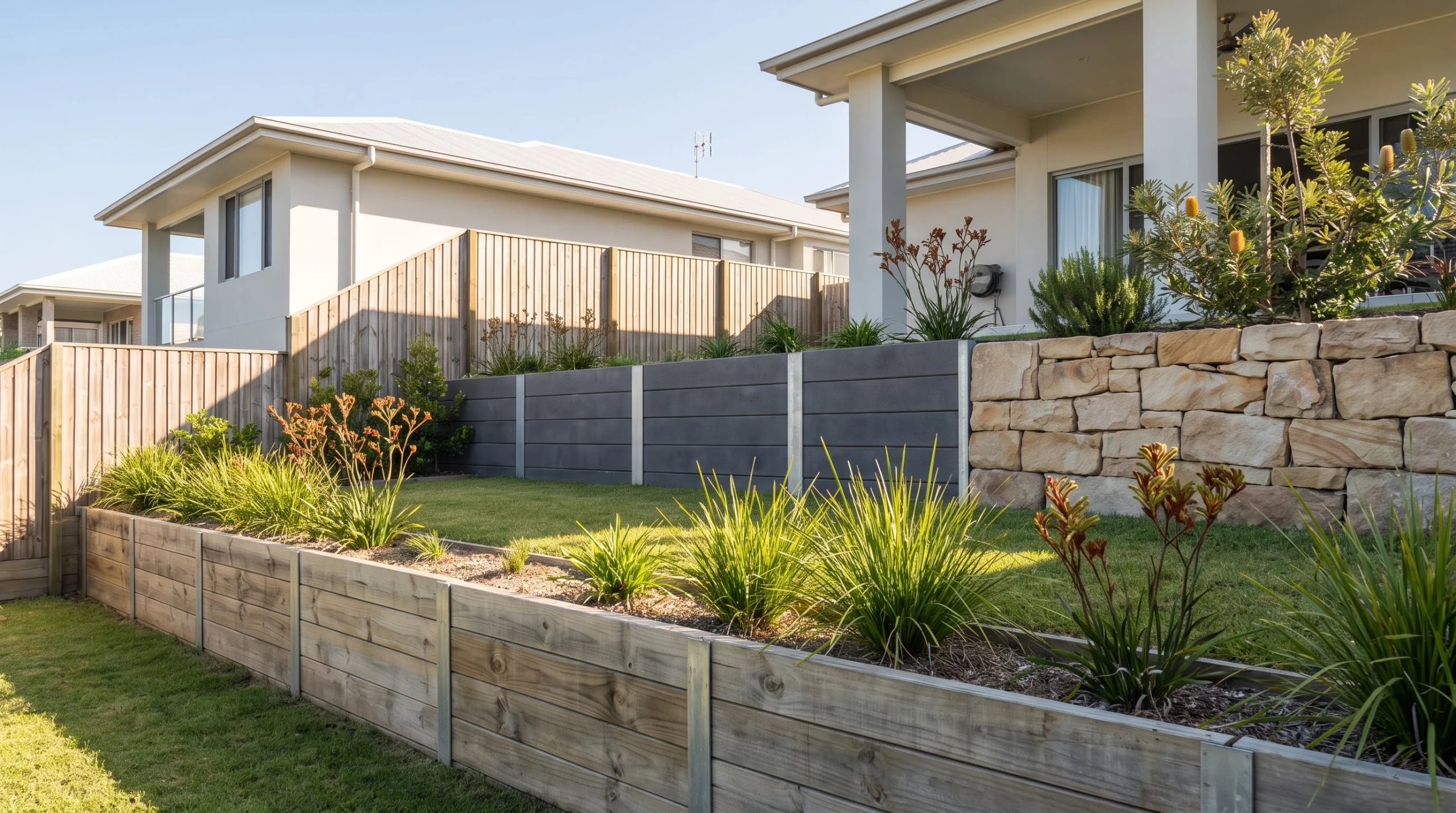
The type of retaining wall you have influences how you landscape around it. Different wall types have different surface characteristics, different moisture profiles at the base, and different aesthetic characters that the surrounding landscape should complement rather than fight against. Understanding your wall type helps you make better decisions about planting, edging, and hard landscaping materials.
Concrete Sleeper and Concrete Block Retaining Walls
Concrete sleeper retaining walls and concrete block retaining walls are the most common wall types across Gold Coast residential properties. Concrete sleepers are available in a range of finishes including woodgrain, smooth render, and exposed aggregate, and the landscape around them looks best when it reinforces the clean, structured character of the wall. Formal garden beds with defined edging, clipped hedges, ornamental grasses, and hard landscaping in complementary materials all suit concrete walls on the gold coast well. Concrete retaining walls are built to last and require minimal ongoing maintenance, which means the landscaping around them can be as permanent as the wall itself.
Concrete block retaining walls, including rendered besser block and engineered retaining systems, suit contemporary landscaping schemes where hard lines and a uniform finish are the goal. A professionally built retaining wall in concrete block finished with a rendered face pairs well with poured concrete paths, steel garden edging, and architectural planting rather than loose naturalistic schemes.
Timber Retaining Walls and Sleeper Retaining Wall Options
Timber retaining walls including treated timber retaining walls and hardwood sleeper retaining wall options suit naturalistic, garden-integrated landscapes. The warm tones of a sleeper retaining wall work well alongside native plantings, tropical foliage, and informal mulched garden beds. A sleeper retaining wall that is surrounded by lush planting feels embedded in the garden rather than imposed on it, and that integration is one of the reasons timber walls remain popular for garden retaining wall applications despite their shorter lifespan relative to concrete.
For homeowners with an existing timber sleeper wall that is approaching end of life, the landscaping phase is also a good time to assess whether the wall itself needs attention. Smaller walls showing early signs of lean or rot can sometimes be addressed while landscaping work is underway, avoiding a more disruptive repair later. Retaining wall builders can assess the condition of the wall as part of the site visit before landscaping begins.
Rock Retaining Walls, Sandstone and Natural Stone
Rock retaining walls, sandstone retaining walls, and natural stone block walls suit hinterland Gold Coast properties and high-end landscape projects where the wall is a design feature as much as a structural element. Stone walls on the gold coast look exceptional when surrounded by native groundcovers, ornamental grasses, and low-maintenance Australian plants that echo the natural character of the stone. Formal or highly structured planting tends to compete with the organic texture of rock and sandstone rather than complement it.
Soil Preparation and Proper Drainage After the Build
The soil immediately behind and around a new retaining wall is often a mix of fill, compacted subsoil, and construction spoil that won’t support healthy plant growth without amendment. Before any landscaping projects begin in earnest, assessing and preparing the soil is the step most homeowners skip and later regret.
In most cases the retained area needs a layer of quality topsoil or garden mix before planting begins. On Gold Coast properties a blend of quality loam and compost works well for most garden beds. Avoid using straight sandy fill as a planting medium: it drains too freely, holds few nutrients, and won’t support established plants through Queensland’s dry periods. Most ornamental plants need at least 300mm of quality growing medium. Vegetables and deep-rooted plants need more. Proper installation and maintenance of the growing medium from the start is what separates a thriving garden from one that struggles through its first dry season.
Checking Drainage Before You Plant
Good drainage behind the retaining wall protects the wall structure, but drainage through the garden bed itself matters for plant health. Gold Coast soils in clay-heavy hinterland suburbs can hold water at the surface and cause root rot in plants that prefer free-draining conditions. Mixing in coarse sand or gypsum improves drainage in heavy clay. If you’re planting into a raised bed situation where the retained soil is deep, incorporating drainage material at the base of the planting zone is worth considering for water-sensitive species. Proper drainage is one of those details that protects both the wall and the garden simultaneously, and it’s the element that retaining wall builders on the Gold Coast most commonly flag as underdone on existing sites.
Plant Selection for Gold Coast Retaining Wall Gardens
Plant selection for the landscape around a retaining wall on the Gold Coast comes down to three factors: the conditions the plant will face, the look you’re trying to achieve, and how much maintenance you’re willing to commit to. The microclimate around a retaining wall can be more demanding than an open garden bed, and choosing plants that suit those specific conditions rather than generic garden-centre picks makes a real difference to establishment and longevity.
Walls that face north or west retain heat and reflect it back into the planting zone. In summer that can stress plants that prefer cooler conditions. Walls that create shade on their southern face suit ferns, shade-tolerant groundcovers, and moisture-loving species. Understanding which side of the wall you’re planting on and how the sun moves across it will help you build a retaining wall garden that looks good year-round rather than struggling through summer.
Reliable Performers for Gold Coast Properties
Plants that consistently perform well in the landscape around retaining walls on the Gold Coast include:
- Liriope and mondo grass for low borders and groundcover along wall bases
- Lomandra varieties for tough, low-maintenance mid-height planting
- Dwarf agapanthus for repeating colour along wall edges without aggressive root systems
- Native grasses and Dianella species for a naturalistic, low-maintenance look
- Bougainvillea for north-facing walls where heat and colour are both welcome
- Bromeliads and cordylines for bold foliage in sheltered or shaded zones
- Creeping fig or star jasmine as wall-softening climbers on older concrete or stone walls
Plants to avoid near any wall type: species with aggressive root systems planted close to the wall face. Bamboo, large figs, and some palms can compromise wall construction and drainage systems over time. Keep vigorous root systems at least a metre back from the wall face and further for larger species. Soil erosion and root pressure are the two most common ways landscaping damages a retaining wall after construction, and both are preventable with the right plant placement.
Steps, Paths, Fencing and Hard Landscaping
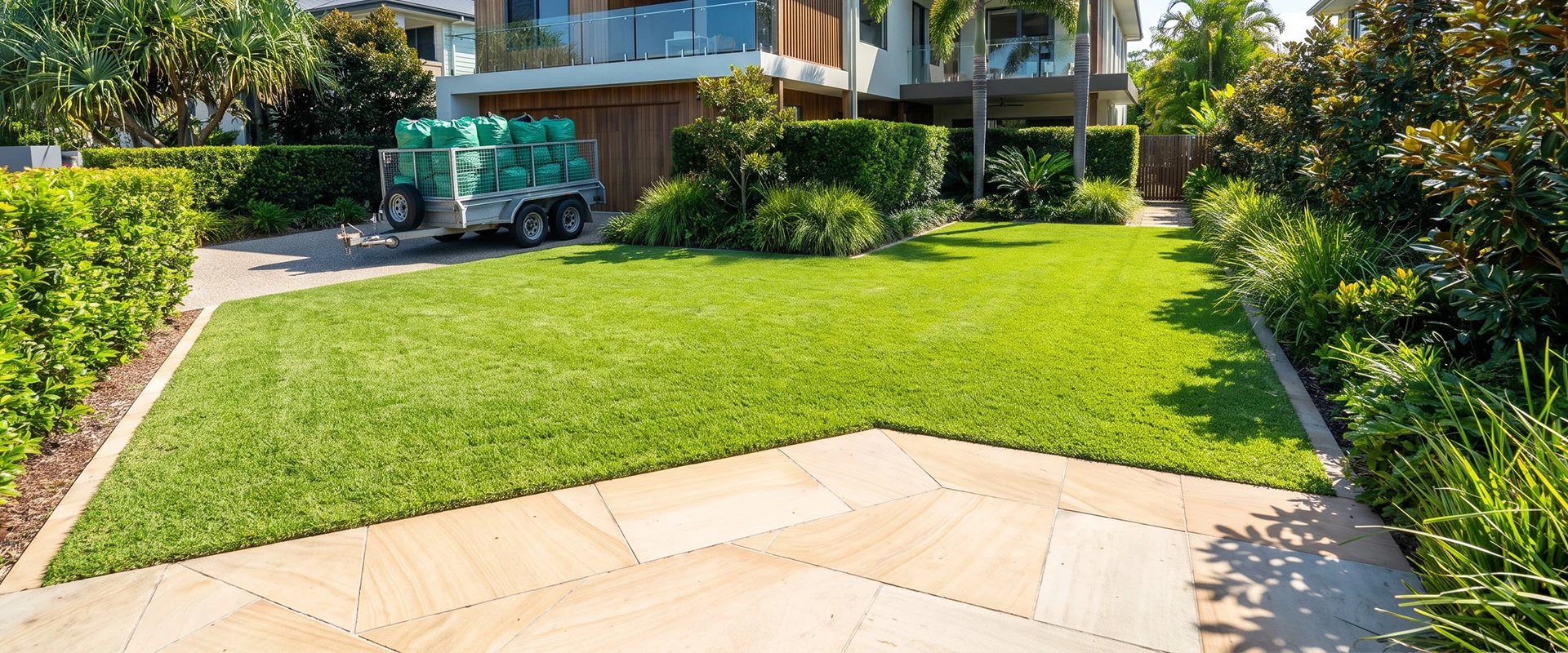
The soft landscaping around a retaining wall looks better and lasts longer when hard landscaping elements are resolved first. Steps, paths, garden edging, and fencing define the space, separate planting zones from lawn or entertaining areas, and give the finished landscape a considered, intentional quality that planting alone doesn’t provide.
If your retaining wall creates a level change that is navigated regularly, steps are not optional and they’re also a design opportunity. Steps that match the wall material tie the levels together and make the outdoor space feel cohesive. Wide generous steps that are comfortable to walk and informal enough to sit on suit Gold Coast entertaining-oriented properties particularly well. Where a fence line runs along or near the retaining wall, resolving the fence and wall connection as part of the landscaping phase rather than leaving it as a gap to fill later produces a much cleaner outcome.
For path surfaces, exposed aggregate concrete, pavers, decomposed granite, and decking are all popular choices on Gold Coast residential properties. The material should tie into the wall type and the broader outdoor space rather than introducing competing materials that reduce visual coherence across the landscape.
Connecting the Wall to Your Outdoor Space
A retaining wall that sits in isolation from the rest of the outdoor space always looks like an afterthought. The best outcomes happen when the wall is part of a broader landscape and outdoor space design from the start, but even when landscaping follows the build there are practical ways to connect the wall to the space around it.
Decking or a paved entertaining area that meets the top of a retaining wall creates a seamless transition between the retained level and the living space. On Gold Coast sloping blocks, a retaining wall combined with a deck or patio platform is one of the most effective ways to build retaining walls that serve both a structural and a lifestyle function simultaneously. Retaining walls combine structural support with the creation of usable outdoor space, and the landscaping that surrounds them is what brings that potential to life.
Raised garden beds built against or integrated into the retained side of the wall are another natural extension. The wall is already holding soil in place: a framed garden bed on the retained side creates a productive growing space with minimal additional material. For retaining wall ideas that cover how tiered walls and garden beds can work together on a sloping Gold Coast block, the article on retaining wall ideas for sloping blocks is worth reading alongside this one.
Does Your Landscaping Project Need Council Approval or an Engineer?
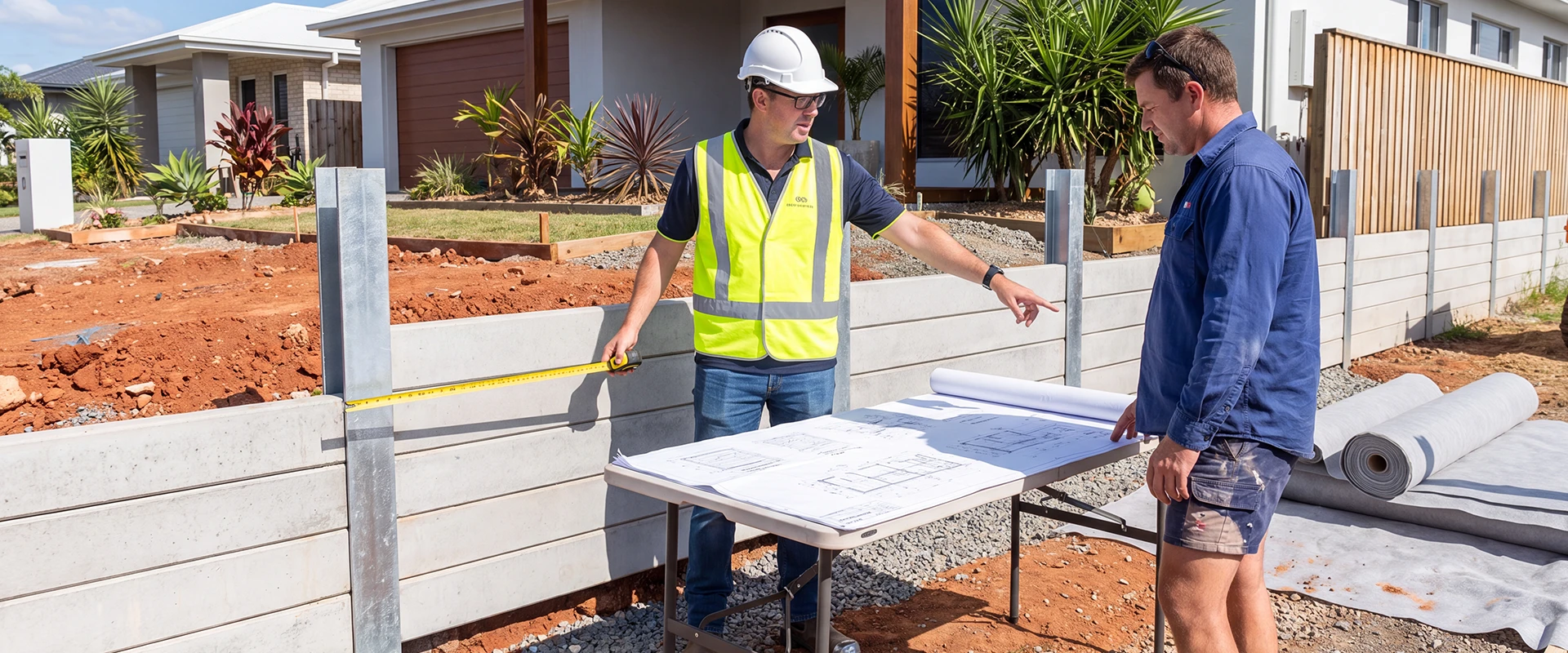
Most residential landscaping work around a completed retaining wall does not require council approval or an engineer. However, if your landscaping plans involve adding significant soil load behind the wall, building a structure on the retained area, or extending the wall height as part of the landscaping scope, those changes may affect the wall’s structural support requirements and should be discussed with a professional retaining wall builder before work begins.
Retaining walls over one metre high already require a building approval and engineering input in Queensland. Walls over one metre high that have any additional loading applied after construction should be assessed by an engineer to confirm the original design accommodates the change. Gold Coast’s building regulations are administered by Gold Coast City Council, and for anything that involves changes to a structure that required approval at the time it was built, it’s worth checking before you proceed rather than after. The article on council approval for retaining walls on the Gold Coast covers the relevant thresholds and what the process involves.
Retaining Wall FAQs
How soon can I plant after a retaining wall is built?
Two to four weeks after completion is a reasonable waiting period for most sites. This gives the backfill time to settle and lets you confirm drainage is working before plants go in. On sites where a significant volume of fill was used, waiting a little longer is worthwhile.
What plants should I avoid near a retaining wall?
Avoid plants with large or aggressive root systems within a metre of the wall face. Bamboo, large palms, and fig species are the most common offenders on Gold Coast residential properties. Root systems that grow under or behind a wall can compromise footings and block drainage systems over time, and the damage they cause is expensive to rectify once established.
Can I build raised garden beds against my retaining wall?
Yes, and it’s one of the best ways to make the most of the retained space. Timber-framed or block-built raised beds on the retained side create productive growing space without adding structural load to the wall itself. Make sure drainage from the raised bed can exit freely rather than pooling against the wall face, and avoid piling soil directly against a timber sleeper wall without a liner between the two.
Do I need a landscaping services professional or can I do it myself?
For soft landscaping including planting, mulching, and garden bed preparation, confident DIYers can achieve excellent results with the right soil preparation and plant selection. For hard landscaping including steps, paths, and edging, professional landscaping services produce a more durable and visually consistent outcome, particularly when the materials need to tie into a professionally built retaining wall. Design and build projects that combine retaining walls with landscaping are worth engaging a professional for end to end.
How do I prevent soil erosion around my new retaining wall?
Mulching is the most immediate and effective step. A 75 to 100mm layer of organic mulch applied after planting holds soil in place, retains moisture, and reduces the surface runoff that causes erosion around freshly landscaped areas. Establishing groundcover plants quickly in open soil areas also helps prevent erosion in the first growing season. Proper drainage behind the wall reduces the volume of water moving through the retained soil, which is the underlying cause of most soil erosion issues around retaining walls on sloping Gold Coast blocks.
Get a Free Quote from Trusted Retaining Wall Builders on the Gold Coast
A new retaining wall is the foundation. The landscape around it is what turns a construction site into an outdoor space your household actually uses and enjoys. Getting soil preparation, plant selection, drainage, and hard landscaping sequenced correctly from the start saves time, money, and frustration down the track.
If you need a retaining wall built or want advice on how the landscaping will connect to a finished project, give the team at Goldie Retaining Walls a call on 0411 850 390 to get a free quote. As reliable retaining wall builders offering services on the Gold Coast for residential and commercial projects, we design and build retaining walls that combine structural durability with outcomes that work for the landscape around them. That’s what a professional Gold Coast retaining wall team does every day at Goldie Retaining Walls, and we’d love to help you get the full project sorted properly (couldn’t resist the plug).