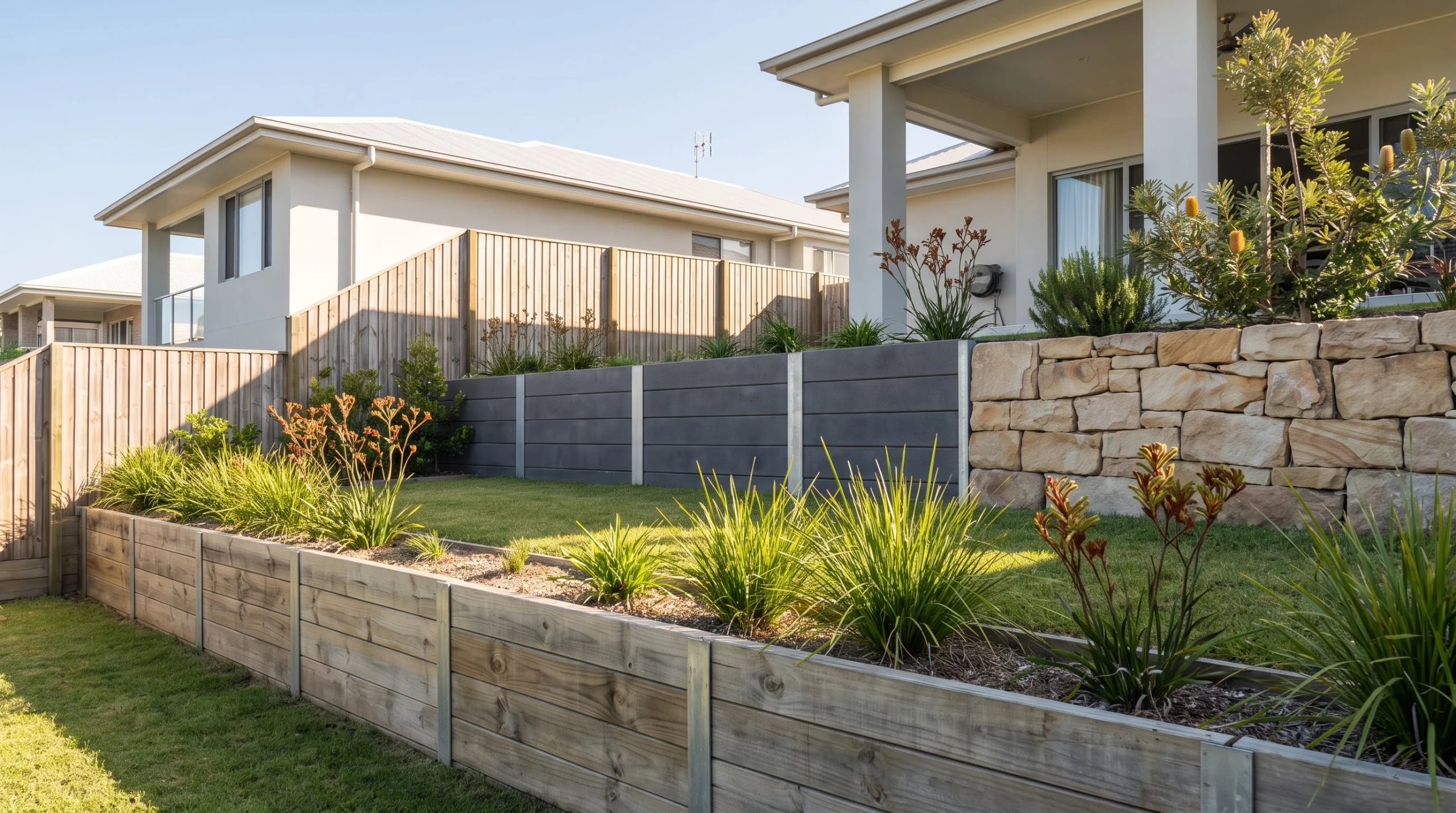
Concrete sleeper or timber retaining wall are both common on the Gold Coast, but they suit very different situations. If you’re building a small garden wall, timber can be perfect. If you’re retaining a slope, leveling a yard, or building near a pool area, concrete sleepers are often the safer long-term option.
This guide breaks down the durability, cost, maintenance, appearance, and best use cases for each material, plus the real deciding factors most people don’t consider when choosing between timber vs concrete sleeper retaining walls.
Timber Retaining Walls: Where They Shine
Timber retaining walls work beautifully for low garden retaining, decorative landscaping, tiered garden beds, and natural-looking yards where the wall is more about aesthetics than heavy-duty structural work.
Why Timber Is Popular
Timber looks great in a garden setting. It blends naturally with greenery, fencing, outdoor timber decks, and traditional landscaping styles that lean toward a softer, organic feel. It’s also usually cheaper upfront, which makes it attractive for homeowners working with a tighter budget or tackling multiple smaller garden projects at once.
If you’re creating raised planter beds, bordering a garden path, or adding some visual interest to a relatively flat yard, timber can deliver exactly what you need without overengineering the solution.
The Downsides (Gold Coast Reality)
Timber is more vulnerable to moisture exposure, drainage issues, termites, and rot over time. On the Gold Coast, where we deal with high humidity, summer storms, and active termite populations, these aren’t just theoretical concerns. They’re real risks that affect how long your wall will last.
If the wall sits at the base of a slope where water runs down regularly, or if it’s in a shaded area that stays damp, timber lifespan can reduce significantly. You might get five to ten years out of a well-built timber wall in ideal conditions, but in challenging conditions, that can drop considerably.
Concrete Sleeper Retaining Walls: Built for Structural Jobs
Concrete sleeper retaining walls are best for sloped blocks, structural retaining, modern landscapes, pool-side yard leveling, and boundary retaining where long-term stability actually matters.
Why Concrete Sleepers Win Long-Term
Concrete sleepers offer strong structural performance, very low maintenance, complete resistance to termites and rot, and an excellent lifespan that can easily stretch beyond 30 years. They’re especially popular on the Gold Coast where water exposure is common and homeowners want a solution they won’t need to replace or repair within a decade.
For properties with significant slopes, concrete sleepers can be engineered to handle the load properly. They don’t warp, they don’t rot, and they don’t need treating or sealing. Once they’re in, they’re done.
The Downsides
Concrete sleepers typically involve higher upfront cost, heavier installation requirements, and more planning around access and excavation. They’re not something you can easily install yourself over a weekend, and they require proper equipment to handle safely.
But for structural jobs where the wall is doing real work to hold back soil and manage water pressure, concrete sleepers are usually the better investment. The extra cost upfront is often recovered over time through lower maintenance and longer lifespan.
The Most Important Factor: Drainage (Not Concrete Sleeper or Timber Retaining Wall)
A lot of people focus on materials first, but the truth is that drainage determines whether a wall lasts. A concrete sleeper wall with poor drainage can still lean and fail. A timber wall with excellent drainage can outlast expectations.
A proper retaining wall should include gravel backfill, agricultural pipe, geofabric, and correct discharge to manage water pressure. Without these elements, it doesn’t matter whether you chose timber or concrete—the wall is vulnerable.
On the Gold Coast, where storm season can dump intense rainfall in short bursts, drainage isn’t a nice-to-have. It’s the foundation of a wall that will still be standing straight in ten years.
What We Recommend for Pool Areas
If your retaining wall is near a pool, concrete sleepers are often the safer option. Pool areas mean constant moisture exposure, and any movement in the retaining wall can crack expensive paving, damage pool coping, or compromise the pool structure itself. Repairs in these areas are costly once finishes are installed, so getting it right the first time matters more.
Timber can work in pool landscaping if it’s used for low decorative elements well away from the pool edge, but for anything structural or directly adjacent to the pool, concrete sleepers provide the stability and longevity you need.
Appearance: Modern vs Natural
Concrete sleepers suit modern, clean-lined landscapes. They pair well with contemporary paving, minimalist garden designs, and properties where the outdoor space has a structured, architectural feel.
Timber suits natural, softer landscapes. If your yard has lots of planting, curved garden beds, established trees, and a relaxed coastal vibe, timber blends in seamlessly and feels like part of the garden rather than an addition to it.
Neither is objectively better looking—it depends entirely on the style you’re going for and how the retaining wall fits into the overall landscape design.
Cost Comparison: Upfront vs Long-Term
Timber is cheaper upfront, often significantly so for smaller walls. But it requires more maintenance over time, has a shorter lifespan, and may need replacing within a decade depending on conditions.
Concrete sleepers cost more initially but require almost no maintenance and can last 30+ years without issue. Over the life of the wall, concrete sleepers often work out to be better value, particularly for structural applications where failure means expensive repairs.
If you’re planning to stay in your home long-term, concrete sleepers are usually the smarter financial decision. If you’re on a tight budget and only need a low garden wall, timber can be perfectly adequate.
Quick Decision Guide
Choose Timber If:
- The wall is low (under 600mm)
- It’s mostly decorative
- You want a natural garden look
- The soil load is light
- The wall isn’t near constant water exposure
Choose Concrete Sleepers If:
- The wall is structural
- The slope is steep
- The wall is near a pool area
- You want low maintenance
- You want the longest lifespan
What About Composite or Treated Timber?
Treated timber lasts longer than untreated, but it still doesn’t match concrete for longevity in Gold Coast conditions. Composite sleepers (made from recycled plastic and timber fiber) sit somewhere in the middle—they resist rot and termites better than natural timber but don’t have the structural strength of concrete.
For decorative applications, composite can be a good compromise. For structural walls, concrete remains the more reliable choice.
Can You Mix Timber and Concrete in the Same Project?
Yes, and it’s fairly common in tiered landscaping. You might use concrete sleepers for the main structural wall holding back a slope, then use timber for lower decorative garden beds in front of it. This gives you the structural stability where you need it and the natural aesthetic where it suits the design.
The key is making sure each wall is designed and built for its specific purpose, rather than trying to make one material do everything.
Want Help Choosing?
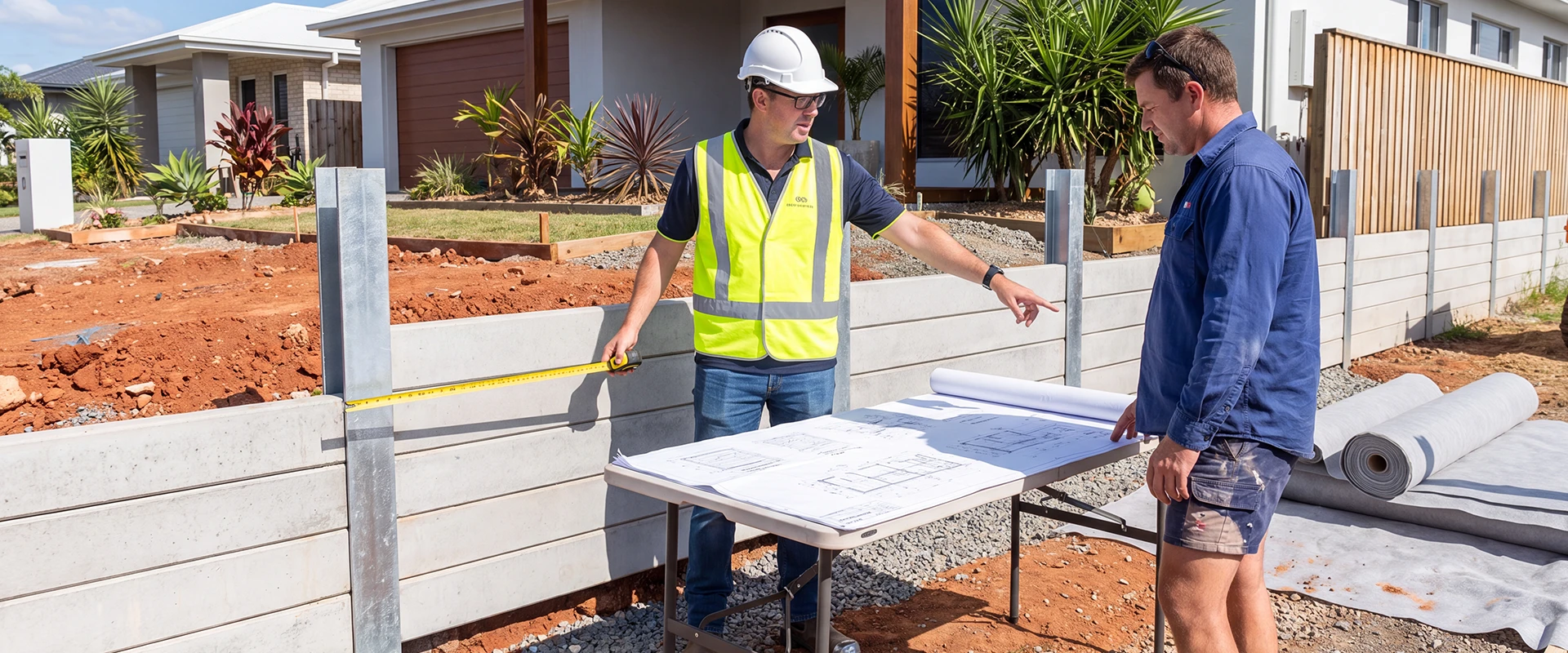
If you’re unsure whether timber or concrete sleepers are right for your property, Goldie Retaining Walls can inspect your Gold Coast yard and recommend the right retaining wall type based on your slope, soil conditions, wall height, drainage needs, and the look you want for your landscaping.
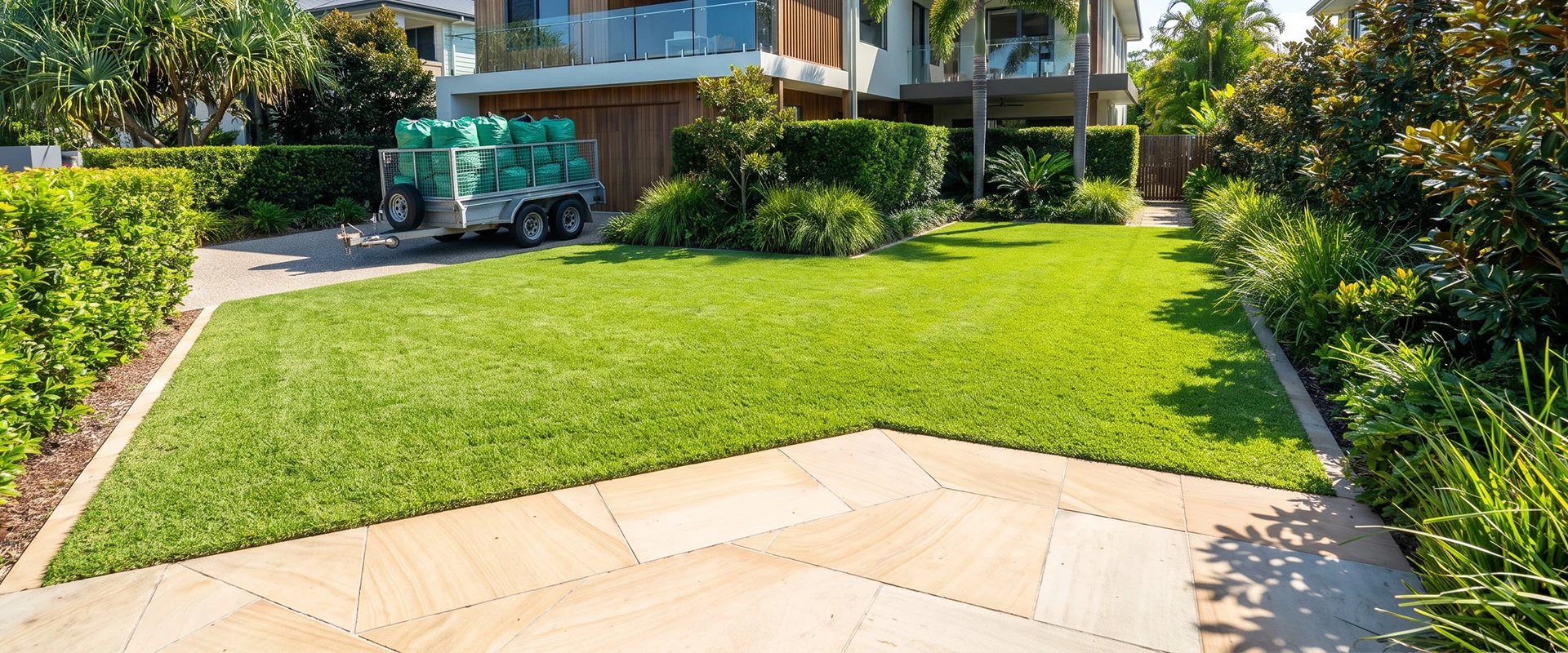
We also handle yard clean-up and landscaping prep so the project runs smoothly from start to finish.