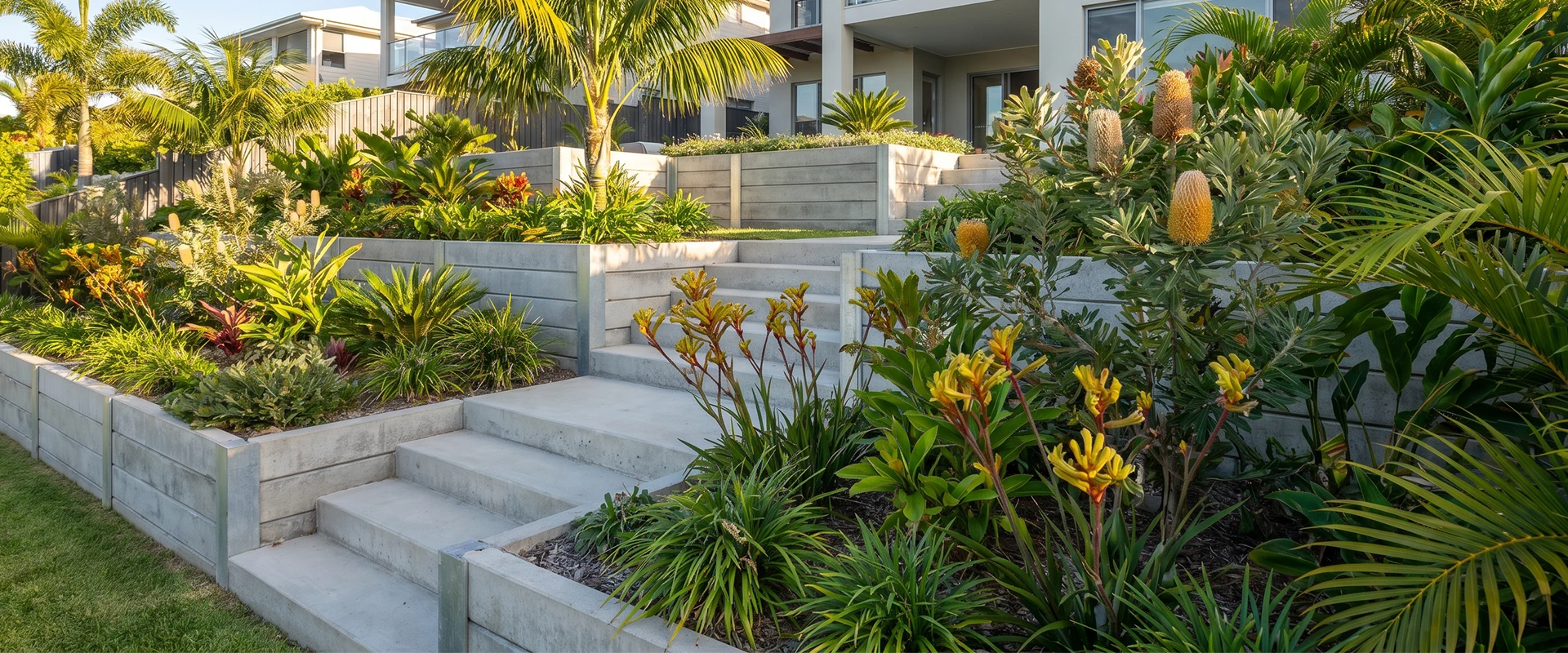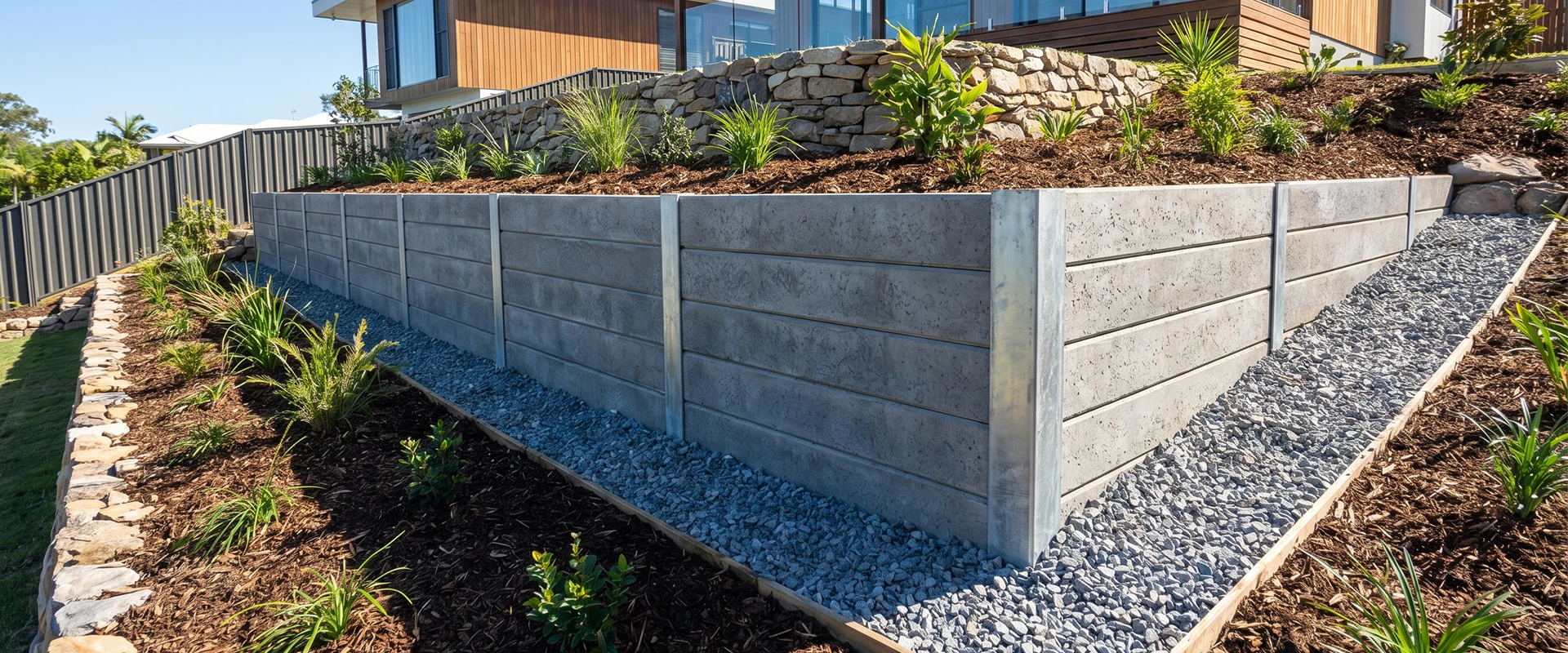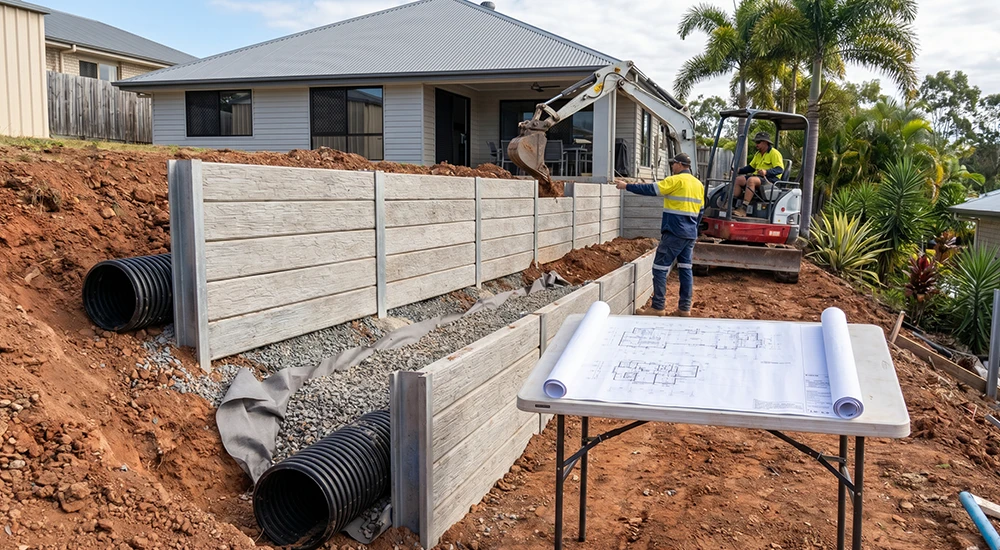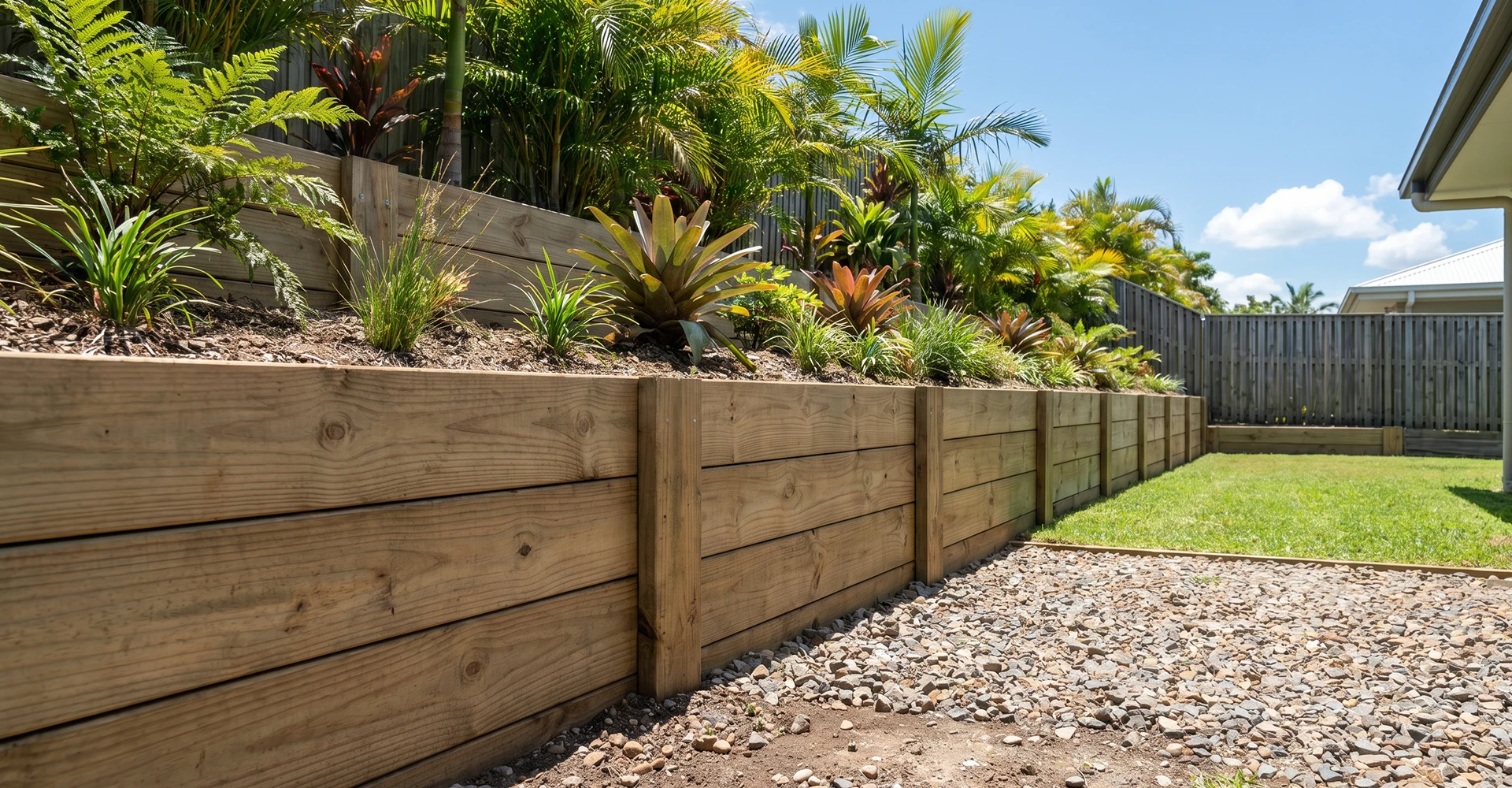
Retaining Walls Gold Coast aren’t just about making your yard look nicer. They’re often the difference between a stable, usable backyard and a slope that keeps shifting every wet season. Whether you’re planning a pool area, raised garden beds, new turf zones, or dealing with a split-level property, understanding what makes a retaining wall work in our coastal conditions can save you from expensive failures down the track.
The tricky part is this: retaining walls can look perfectly fine and still be built wrong. And when they fail, it’s rarely subtle.
What a Retaining Wall Actually Does (In Plain English)
A retaining wall holds soil in place when your yard has a change in height. Without one, gravity wins eventually, especially during heavy rain when soil moves downhill. They stop erosion, stabilise slopes, create flat zones for lawns or patios, protect fences and boundary edges, and control runoff and water movement across your property.
Why Gold Coast Properties Need Retaining Walls
Gold Coast blocks often present a unique challenge. You’ll find sloping yards mixed with sandy patches that move easily and clay-heavy areas that hold water and become extremely heavy when saturated. Add our fast stormwater flow during summer storms, and you’ve got the perfect conditions for garden washouts, sinking edges, leaning fences, and collapsing garden beds.
A well-built retaining wall is specifically designed to handle these conditions over the long term, not just look good on installation day.
The 4 Most Common Retaining Wall Types (And Where They Work Best)
Concrete Sleeper Retaining Walls
Concrete sleeper walls are the go-to choice for modern Gold Coast homes, especially where the wall needs to be structural. You’ll commonly see them used for sloped backyards, pool-side leveling, long boundary runs, and raised turf areas.
They’re popular because they’re strong and long-lasting, completely resistant to termites and rot, require minimal maintenance, and can handle higher walls without issue. For properties where the retaining wall is doing real structural work, concrete sleepers are hard to beat.
Timber Retaining Walls
Timber walls are still widely used on the Gold Coast, particularly for garden beds, low decorative walls, and tiered landscaping where the load is relatively light. People choose timber for its natural look, lower upfront cost, and the way it blends seamlessly into garden-heavy yards.
But timber comes with vulnerabilities in our climate. It’s more sensitive to moisture, struggles with poor drainage, and faces genuine termite risk. If you’re building low and decorative, timber can work beautifully. For anything structural or exposed to constant moisture, it’s worth considering alternatives.
Concrete Block Retaining Walls
Block walls deliver a clean finish and work particularly well in tiered gardens and structured landscape designs. They’re ideal when the wall height is moderate, you want neat lines as part of a larger yard renovation, or the retaining wall needs to integrate with other hardscaping elements like paving or outdoor entertaining areas.
Rock and Boulder Walls
Boulder walls are the premium option when the retaining wall is meant to be a feature, not just functional infrastructure. They suit larger properties, coastal landscaping designs with lots of planting and natural textures, and situations where you want the wall to feel like part of the landscape rather than an addition to it. They usually require good access for machinery, so they’re not suitable for every site.
Structural vs Decorative: The Part Most Homeowners Miss
A low garden border holding back 300mm of soil is one thing. A retaining wall becomes structural when it holds back a slope, sits close to a boundary, supports a pool area, patio, driveway, or shed pad, or is tall enough that failure could cause actual damage.
Structural walls need:
- Correct footing depth
- Proper reinforcement or posts
- Engineered drainage systems
- Appropriate backfill material
If someone quotes a structural wall like it’s a simple garden job, that’s a red flag you shouldn’t ignore.
The #1 Reason Retaining Walls Fail (And It’s Not the Material)
Most retaining wall failures come down to water pressure behind the wall. When water can’t drain away properly, the soil becomes saturated and significantly heavier. Pressure builds against the wall, and eventually it starts to lean, bow, or crack. On the Gold Coast, this becomes especially critical during storm season when we can get months’ worth of rain in a single afternoon.
The material you choose matters, but drainage design is what determines whether your wall is still standing straight in five years.
Retaining Walls and Pool Areas: What You Need to Know
Pool landscaping is one of the most common reasons Gold Coast homeowners install retaining walls, and it’s also one of the areas where getting it right matters most. Walls near pool areas face constant water exposure, require carefully controlled drainage to protect both the wall and pool structure, and sit in areas where ground movement can affect expensive paving and coping.
Pool retaining walls aren’t the place to cut corners or take the cheapest quote. Failure here doesn’t just mean a leaning wall—it can mean damaged pool finishes, compromised structural integrity, and significant repair costs.
What Actually Affects Retaining Wall Cost?
The biggest cost drivers aren’t always obvious. Height is the main factor because taller walls require more substantial structural builds. From there, you’re looking at total length, material choice, how much excavation is required, site access for machinery, drainage complexity, and whether you’re removing an old wall or dealing with significant yard clean-up.
A 600mm garden wall with good access is a completely different job to a 2-meter structural wall on a steep, narrow block with an old timber wall to remove first.
Where Yard Clean-Up and Landscaping Fit In
Most retaining wall jobs involve more than just the wall itself. Many Gold Coast projects include removing old timber walls, clearing overgrowth and green waste, excavation and soil removal, leveling areas for turf or paving, and drainage improvements that need to happen at the same time as the wall installation.
Doing this as one coordinated project is usually faster, cleaner, more cost-effective, and delivers a better finished result than trying to patch together separate trades over multiple months.
Need a Retaining Wall on the Gold Coast?
Goldie Retaining Walls builds retaining walls designed for real Gold Coast conditions, including sloping blocks, pool landscaping, and storm-season drainage. We also provide full yard prep, clean-up, and landscaping support so the whole project runs smoothly from start to finish.