Raised garden beds have become one of the most popular backyard additions on the Gold Coast, and it’s easy to understand why. They bring the growing surface up to a comfortable working height, give you complete control over your soil quality, extend the growing season, and look genuinely good in a well-designed outdoor space. But not all raised garden beds are created equal, and in Queensland’s climate, the material you build them from makes a bigger difference to longevity than most people realise before they start. Here’s what works, what lasts, and what to think about before you build.
Why Raised Garden Beds Suit the Gold Coast Climate
Queensland’s climate is both a gift and a challenge for gardeners. The long warm growing season means you can grow year-round in ways that southern states simply can’t, but the combination of intense summer heat, heavy rainfall, and high humidity is hard on garden bed materials, soil structure, and plants alike. Raised garden beds address several of these challenges at once.
Improved drainage is one of the biggest advantages in a Queensland context. Heavy summer rain that would waterlog an in-ground bed drains freely through the base of a raised bed, protecting plant roots from prolonged saturation. Soil temperature control is another: a well-constructed raised bed warms up faster in the cooler months and can be mulched effectively to moderate heat stress during summer. And because you’re filling the bed with a purpose-blended growing medium rather than working with whatever native soil your block has, you’re starting from a much better position than most Gold Coast garden beds that sit in sandy coastal profiles or heavy clay.
Raised Garden Bed Materials: What Lasts in Queensland
The material you choose for your raised garden beds determines how long they last, how they look, and how much maintenance they need over time. In Queensland’s climate, some materials perform significantly better than others.
Treated Pine
Treated pine is the most affordable option and the one most commonly seen in DIY raised garden bed projects across the Gold Coast. It’s widely available, easy to work with, and looks clean when first installed. The limitation is lifespan. In Queensland’s heat and humidity, treated pine garden beds typically last five to eight years before the timber begins to deteriorate. The preservative treatment used in modern pine is copper-based and considered safe for vegetable gardens, but if you’re growing edibles right against the timber, using a lining on the inner face is a reasonable precaution.
Hardwood Sleepers
Hardwood sleepers, including recycled or new ironbark, spotted gum, and similar dense Australian timbers, are significantly more durable than treated pine in Queensland conditions. A hardwood sleeper raised garden bed built correctly can last fifteen to twenty years with minimal maintenance. The timber ages to a silver-grey that looks attractive in a naturalistic garden setting, and the density of hardwood means it resists the moisture cycling that breaks down softer timbers quickly in coastal Queensland. Hardwood costs more upfront than treated pine, but the lifespan difference makes it better value over time for most homeowners.
Concrete Sleepers
Concrete sleepers offer the best longevity of any raised garden bed material available on the Gold Coast. They won’t rot, they won’t be affected by termites, and they handle Queensland’s heat, humidity, and rainfall without any deterioration over time. Concrete sleeper garden beds are available in a range of finishes including woodgrain, smooth, and exposed aggregate, and they suit contemporary homes where a clean, consistent finish is the priority. The trade-off is cost: concrete sleeper garden beds are more expensive than timber options upfront. For a permanent installation that you want to last the life of the property, concrete sleepers are the material most experienced builders recommend.
Rendered Block and Masonry
Rendered concrete block or besser block garden beds suit modern and contemporary Gold Coast homes where the garden bed is as much a design feature as a functional growing space. A rendered block garden bed finished in a colour that ties into the house exterior looks polished and deliberate in a way that timber doesn’t always achieve. These beds are permanent, extremely durable, and easy to maintain. The cost is higher than timber and comparable to or slightly above concrete sleepers depending on the finish specified.
Cor-Ten Steel
Weathering steel garden beds have become increasingly popular on the Gold Coast over the last few years, particularly in contemporary and industrial-style outdoor spaces. Cor-Ten steel develops a stable rust patina over time that many homeowners find visually appealing and that actually protects the steel from further corrosion. It’s durable in Queensland conditions, relatively lightweight compared to masonry options, and available in custom sizes. The material cost sits above timber but below most masonry options, and it suits a specific aesthetic that works particularly well alongside concrete sleeper retaining walls or rendered block features.
Height and Size: Getting the Dimensions Right
The dimensions of your raised garden beds affect both how comfortable they are to use and how well they perform as growing spaces. Getting this right before building saves a lot of frustration later.
Working Height
The most common raised garden bed height on Gold Coast residential properties is between 400mm and 600mm. This range brings the growing surface to a comfortable standing or slightly bent working position for most adults and provides enough soil depth for the majority of vegetables, herbs, and ornamental plants. Beds intended for deep-rooted vegetables like carrots, parsnips, or tomatoes benefit from 600mm or more. Beds used primarily for herbs and salad greens can perform well at 400mm.
For gardeners with mobility considerations, beds at bench height, around 800mm to 900mm, make the whole growing space accessible without bending. These taller beds use more material and cost more to build, but for the right household they transform the gardening experience entirely.
Width and Length
A raised garden bed should be no wider than you can comfortably reach to the centre from either side without stepping into the bed. For most people, that’s around 1.2 metres. If the bed is accessible from one side only, keep the width to 600mm to 800mm. Length is largely a matter of available space and preference, though beds longer than three to four metres in timber can bow outward over time without adequate cross-bracing or intermediate posts.
Soil Mix: What Goes Inside Matters as Much as What Goes Outside
The frame is only half the equation. The growing medium you fill a raised garden bed with determines what you can grow and how well it produces. Native Gold Coast soil, whether sandy coastal profiles or clay-heavy hinterland soil, is rarely suitable as a standalone growing medium for raised beds.
A purpose-blended raised bed mix typically combines quality loam, compost, and coarse sand or perlite for drainage. Most garden centres on the Gold Coast sell purpose-blended vegetable and garden mixes that are suitable for raised beds straight from the bag. For large beds, ordering in bulk from a landscape supplier is more economical and gives you the ability to specify a blend that suits your intended plants.
Top up with compost at the start of each growing season and mulch the surface between plantings to retain moisture and suppress weeds through Queensland’s dry periods. Raised bed soil tends to consolidate over time as organic matter breaks down, so expect to add material annually to maintain the bed height and growing depth.
Drainage and Weed Control Beneath the Bed
Before filling a raised garden bed, two steps that are often skipped make a significant difference to long-term performance. The first is laying a weed mat or thick layer of cardboard across the base of the bed before adding soil. This suppresses grass and weeds from growing up through the bed from below without blocking drainage. The second is ensuring the ground beneath the bed is reasonably level so the bed sits flat and water distributes evenly through the growing medium rather than pooling at one end.
For beds built directly on concrete or paving, drainage through the base is not an option and the bed needs to be deep enough to provide adequate soil volume. Adding drainage aggregate at the base of the bed before topping with growing medium helps in this situation. For beds on soil, good drainage is usually naturally available through the base, but on clay-heavy Gold Coast sites it’s worth loosening the ground beneath the bed before installation.
Raised Garden Beds and Retaining Walls: A Natural Combination
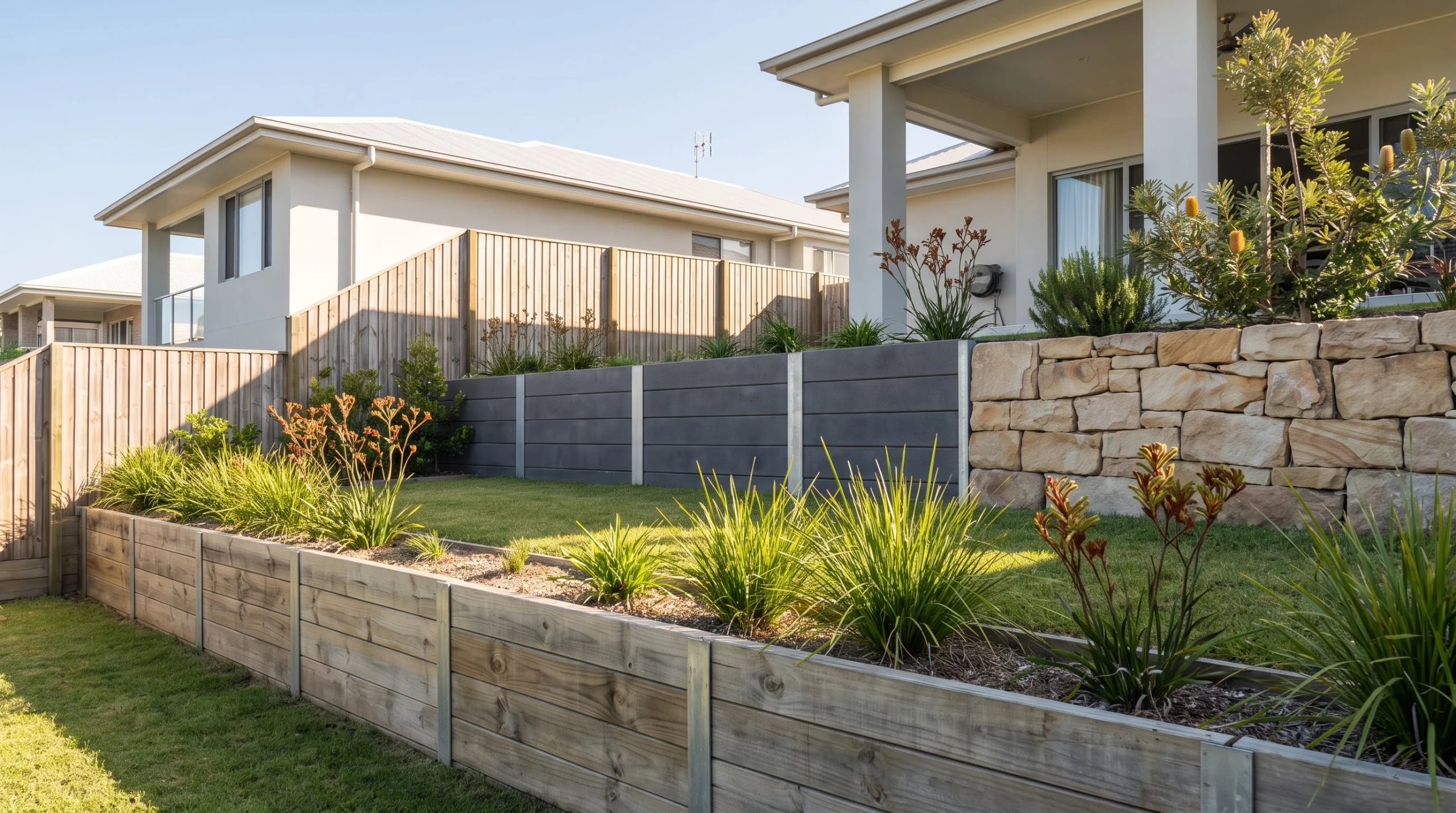
On Gold Coast properties with a slope or level change, raised garden beds and retaining walls often work together as part of the same design. A retaining wall that creates a flat terrace on a sloping block naturally lends itself to a raised garden bed on the retained side, using the wall itself as one face of the bed. This combination is visually cohesive, structurally efficient, and one of the best uses of the space that a retaining wall creates.
If you’re planning both a retaining wall and raised garden beds as part of a broader outdoor project, getting them designed and built together produces a better result than adding the garden beds as an afterthought once the wall is complete. The article on landscaping around a new retaining wall covers what to think about in the post-build phase and how to sequence the landscaping properly.
What Do Raised Garden Beds Cost on the Gold Coast?
Cost varies depending on the material, size, height, and whether installation is included. As a general guide for professionally built raised garden beds on the Gold Coast:
| Material | Approximate Cost Per Lineal Metre | Lifespan |
| Treated pine sleepers | $150 to $300 | 5 to 8 years |
| Hardwood sleepers | $280 to $450 | 15 to 20 years |
| Concrete sleepers | $350 to $550 | 30+ years |
| Rendered block | $500 to $800 | 30+ years |
| Cor-Ten steel | $300 to $500 | 20+ years |
These are indicative ranges for supply and installation and will vary based on bed dimensions, site conditions, and finish. DIY builds using treated pine or hardwood can reduce the cost significantly, though the quality of the finished product depends on the builder’s experience and the materials sourced.
Frequently Asked Questions
Can I build a raised garden bed against my retaining wall?
Yes, and it’s one of the most practical ways to use the space behind a retaining wall. The wall itself acts as one face of the bed, reducing the material needed and creating a cohesive look. Make sure drainage from the garden bed can exit freely rather than pooling against the wall face, and avoid piling soil directly against a timber sleeper wall without a liner between the two.
What vegetables grow well in raised beds on the Gold Coast?
The Gold Coast’s warm climate suits a wide range of vegetables year-round. Through winter, brassicas, leafy greens, root vegetables, and legumes all perform well in raised beds. Through summer, tomatoes, capsicum, eggplant, zucchini, cucumber, and herbs including basil and chilli thrive in the heat. The improved drainage and soil quality of a raised bed gives you more flexibility than in-ground growing, particularly in the heavy summer rainfall period.
Do raised garden beds need council approval on the Gold Coast?
For standard residential raised garden beds, no approval is required. If a raised garden bed forms part of a retaining wall structure over 1 metre in height, or if it’s attached to a structure that requires approval, the approval requirements for the broader structure apply. For standalone garden beds of typical dimensions, you can build without any council involvement.
How do I stop my raised garden bed timber from rotting quickly?
Use hardwood rather than treated pine if longevity is a priority. Keep mulch pulled back slightly from the inner face of timber beds to allow air circulation. Avoid overfilling the bed to the point where soil sits in contact with the top edge of the timber continuously. For timber beds in constantly damp positions, lining the inner face with heavy-duty polythene before filling extends the life of the timber significantly.
Is it worth paying more for concrete sleeper raised garden beds?
For a permanent installation that you want to look good and last without maintenance for decades, yes. Concrete sleeper raised garden beds outlast timber by a significant margin in Queensland’s climate and require no ongoing treatment or replacement. The higher upfront cost is offset by the lifespan difference and the absence of any maintenance overhead. For a temporary or experimental garden bed you might relocate in a few years, treated pine makes more sense.
Ready to Build Something That Lasts?
Raised garden beds are one of those additions that improve a Gold Coast outdoor space immediately and keep delivering year after year when they’re built from the right materials. Whether you’re after a simple hardwood sleeper bed for the veggie patch or a series of rendered block beds integrated into a broader retaining wall and landscaping project, the difference between a bed that looks great in five years and one that’s rotting at the corners comes down to the material and the build quality.
Give the team at Goldie Retaining Walls a call on 0411 850 390 to talk through your project and get a free quote. We build raised garden beds across the Gold Coast using materials that suit Queensland’s climate and last. That’s what we do every day at Goldie Retaining Walls, and we’d love to help you create something that’s still going strong in twenty years (couldn’t resist the plug).
No related posts.