It’s one of the first questions property owners ask when planning a retaining wall, and it’s the right question to ask early. Everything you need to know about retaining wall approvals on the Gold Coast comes down to a few key factors: height, location, and what the wall is holding back. Get it wrong and you could end up with a wall that has to come down, a property sale that stalls, or a liability issue if the wall fails and causes damage next door. Here’s a comprehensive guide to what Gold Coast City Council requires and when council approval is required for your retaining wall project.
The General Rule: When Approval Is and Isn’t Required
Queensland building regulations set out clear thresholds for when a retaining wall needs a formal building approval. As a general guide, Gold Coast City Council requires a building approval for retaining walls if any of the following apply:
- The wall exceeds 1 metre in height, measured from the lowest finished ground level at the base
- The wall is associated with a swimming pool or pool barrier
- The wall affects the structural integrity of another structure, including a fence or building
- The wall is on or near a boundary in a way that could affect a neighbouring property
If your wall meets all conditions for an exempt structure, a building approval is not required and construction begins without a formal application. If any of these conditions apply, council approval is required before work starts.
Understanding the 1 Metre High Rule
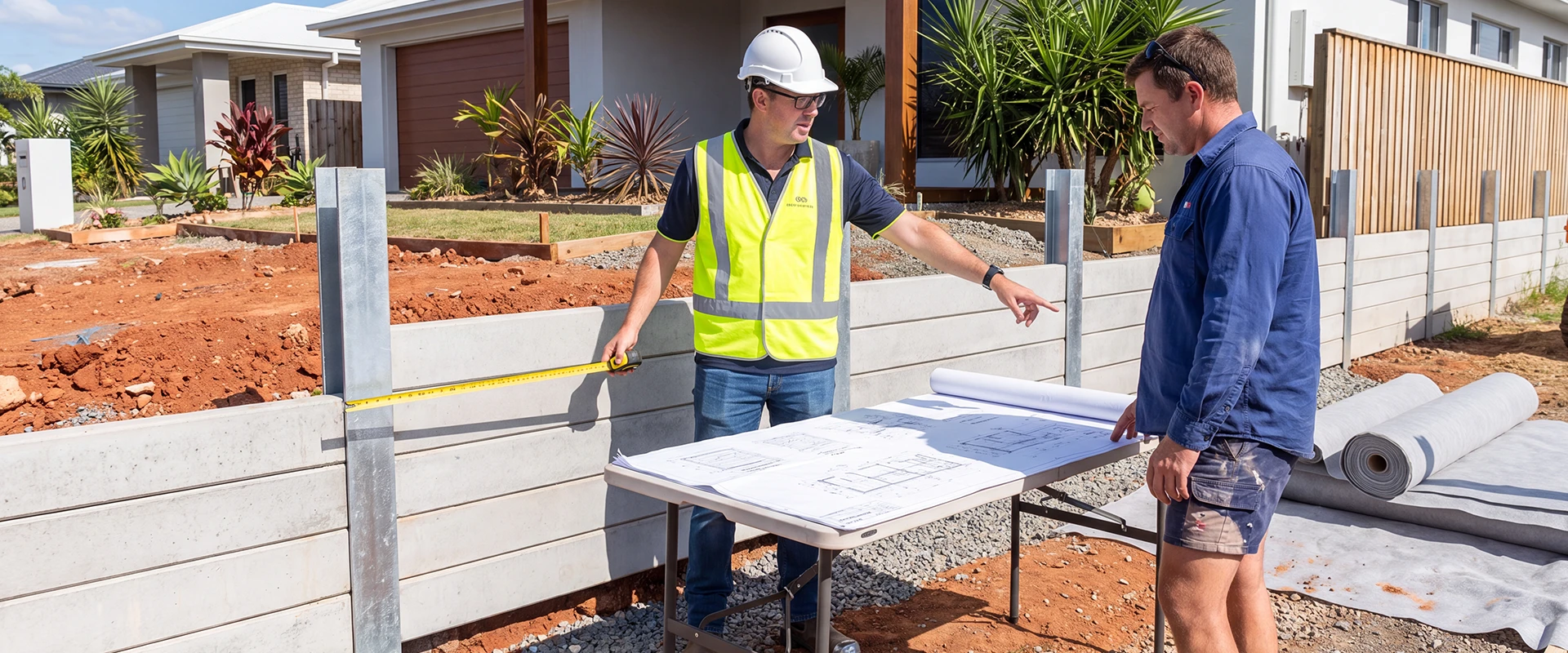
The 1 metre high threshold is the number most people have heard, but it is worth understanding exactly how it is measured. Height is taken from the lowest finished ground level at the base of the wall, not from the top of the retained soil. On a sloping block, a wall that looks modest from the upper side may technically be 1.5 metres or more when measured from the lower side. Many Gold Coast properties have exactly this situation, and it catches homeowners off guard. When in doubt, measure from the bottom.
Retaining Walls Over 1 Metre: What Compliance Involves
When a retaining wall exceeds 1 metre in height, the compliance requirements step up. Retaining walls over 1 metre that require building approval must be designed by a structural engineer and the engineering designs submitted as part of the approval application. The Queensland Building and Construction Commission sets out the licensing requirements for builders carrying out this type of work, and the retaining wall project must meet Australian standards for structural loads, drainage, and materials.
The wall supports soil that can exert significant hydrostatic pressure behind it, particularly after heavy rain. This is why proper drainage behind a wall is not optional: a drainage system that includes gravel backfill, a slotted pipe, and weep holes is standard on any compliant wall. Without it, retaining walls fail, often without warning, and the liability lies with the property owner.
Do You Need a Structural Engineer?
For walls exceeding 1 metre, a structural engineer is almost always required as part of the approval process. The engineer specifies post depths, footing sizes, engineering designs for the wall system, and the drainage system behind the wall. On a steep Gold Coast block with expansive clay soils, this input is what ensures the wall meets the loads it will face over its lifespan. It is not bureaucratic overhead; it is what separates a wall that lasts 20 years from one that fails in the first wet season.
How the Approval Process Works
Whether you’re engaging Gold Coast City Council directly or using a private certifier, the approval process for a retaining wall follows a similar path. A private certifier can often streamline the process and turn approvals around faster than council, which is worth knowing if your project has a tight timeline.
| Stage | What’s Involved |
| Engage a certifier | Private certifier or Gold Coast City Council assesses the application |
| Submit drawings | Structural engineer prepares engineering designs |
| Approval issued | Construction begins once approval is in hand |
| Inspection | Certifier inspects at key stages and on completion |
| Certificate issued | Compliance certificate confirms the wall meets Queensland building regulations |
Allow four to eight weeks for the approval process on a standard residential retaining wall project. Taller walls or those in complex zones may take longer depending on council requirements and the certifier’s workload.
Boundary Walls and Neighbouring Properties
Even walls under 1 metre can become complicated depending on where they sit on the block. A retaining wall on or near a boundary that redirects erosion or water runoff onto neighbouring properties may require neighbour consent or a formal approval regardless of height. Under Queensland building regulations, responsibility for a wall that affects a neighbour lies with the property owner who builds it.
This is one of those situations where doing the right thing early protects everyone. Walls often cause the most disputes not because of their height but because of drainage. A wall that redirects water onto a neighbouring property is a common and expensive problem on Gold Coast’s hilly streets. Good drainage design eliminates that risk. The guide to retaining wall drainage on the Gold Coast covers what proper drainage behind a wall looks like and why it matters.
Retaining Wall Materials and Compliance
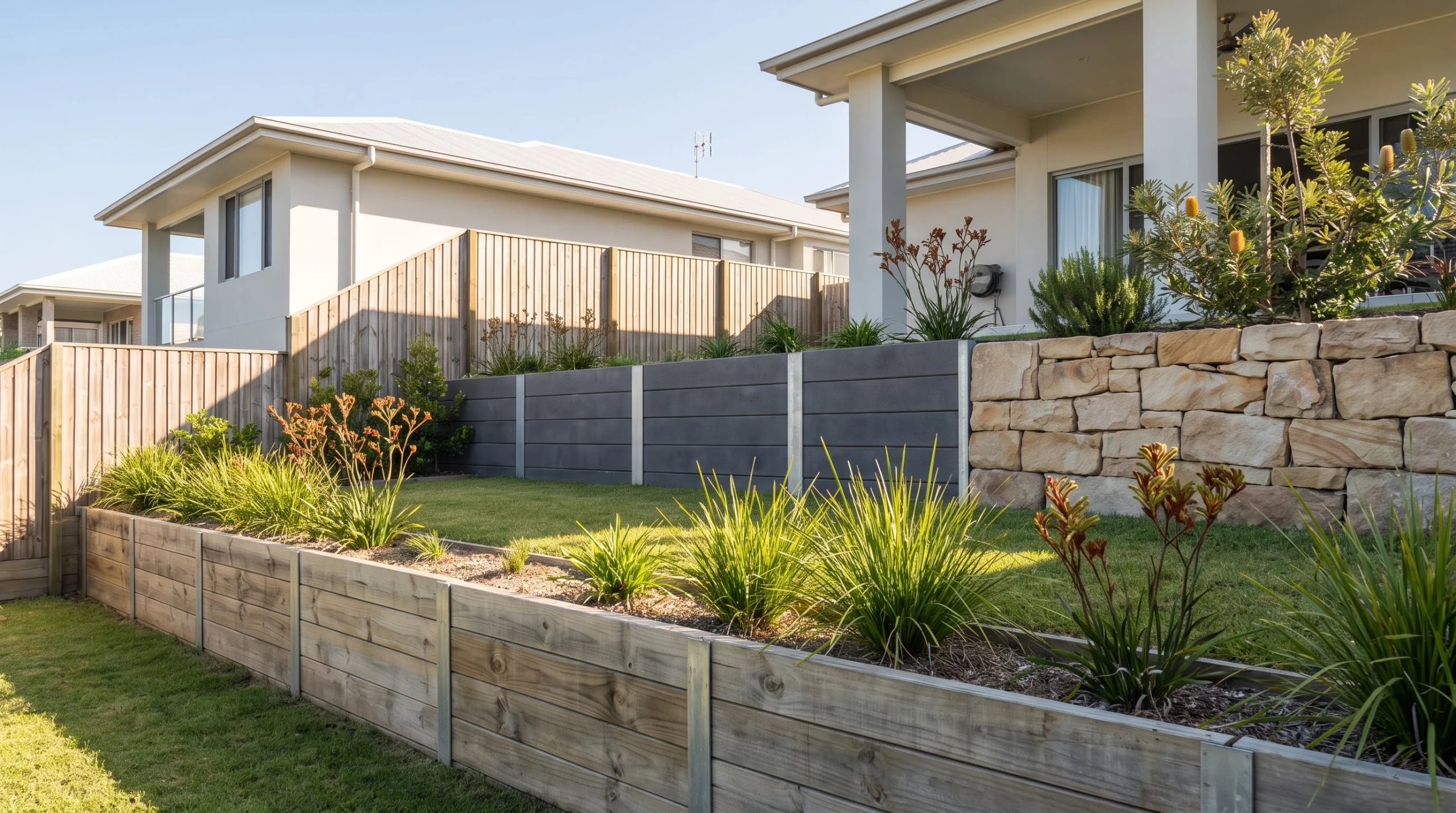
Council regulations don’t prescribe a single retaining wall material, but the material you choose does affect how the wall is engineered and assessed. Concrete retaining walls, timber sleeper walls, and masonry walls all have different structural properties and different engineering requirements. Whether you’re looking at a timber sleeper wall for a garden zone or a concrete system for a taller structural wall, the retaining wall materials must be specified in the engineering designs and must meet Australian standards for the application.
Many gold coast homeowners ask whether a timber sleeper retaining wall can be used for walls approaching 1 metre. The answer is yes, provided the wall meets the structural and drainage requirements for the site. For taller walls, concrete sleeper and engineered retaining systems are more commonly specified. A useful comparison of retaining wall materials is covered in the article on concrete sleeper vs timber retaining walls.
What If a Previous Owner Built Without Approval?
This comes up regularly on older Gold Coast properties where retaining walls were built without council oversight. If you’re buying a property, it’s worth checking whether existing walls have the necessary approvals. Your conveyancer can search council records, and a building inspection will often flag unapproved structures. Without council approval, an existing wall that fails could leave the current owner exposed.
If you suspect a wall on your property is failing, get it assessed sooner rather than later. The typical cost to build a replacement wall is always easier to manage before a failure than after. For a realistic picture of what retaining walls cost on the Gold Coast, the cost of a retaining wall article covers price ranges per square metre and the variables that move the number up or down.
Frequently Asked Questions
Does a wall under 1 metre always avoid the need for approval?
Not always. Even walls under 1 metre may need approval depending on wall location, proximity to a boundary, or association with a pool. When in doubt, check with a private certifier or Gold Coast City Council before construction begins.
Can my retaining wall builder handle the approval process?
A licensed builder experienced in residential retaining wall projects will be able to guide you through the process and connect you with the right certifier or structural engineer. Some builders manage the entire approval on your behalf. Ask about this upfront when getting quotes.
What happens if I build without council approval when one is required?
Building without council approval when one is required is unlawful building work in QLD. Council can issue a show cause notice and order rectification or demolition. It can also affect insurance and complicate property sales. It is not worth the risk.
What is a private certifier and do I need one?
A private certifier is a licensed professional who can assess and approve building work independently of council. Whether you’re using a private certifier or going through council directly, the compliance requirements are the same. Private certifiers often offer faster turnaround and more flexible scheduling, which many Gold Coast homeowners prefer for straightforward retaining wall projects.
How do I know if my retaining wall project meets the rules?
The most reliable approach is to speak with a licensed builder or private certifier early in the planning process. A retaining wall specialist can give you a practical read on whether your wall needs approval based on its height, zone, location, and site conditions. Getting that advice before construction begins is always the smarter move.
Ready to Get a Free Quote on a Compliant Retaining Wall?
Whether you’re planning a new retaining wall or need to know about retaining wall approval for an existing structure, getting the compliance side right from the start saves time, money, and stress down the track. A wall that is properly approved, engineered, and drained is a wall that protects your property for decades.
Give the team at Goldie Retaining Walls a call on 0411 850 390 for a free quote or to talk through your project. We work across the Gold Coast and we know about retaining wall approvals, council requirements, and what it takes to get a job done properly. As a licensed builder experienced in residential retaining wall projects across the Gold Coast, that’s what we do every day at Goldie Retaining Walls, and we’d love to help you get it right.