Timber has a way of making outdoor spaces feel warm and natural straight away. It sits well with gardens, blends into coastal landscapes, and for a lot of Gold Coast homeowners, it just looks right. But before you decide on timber retaining walls for your Gold Coast property, it helps to understand what you’re actually getting: how long they last in Queensland’s climate, what they cost, and where timber works well versus where another material would serve you better.
Types of Retaining Walls: Where Timber Fits In
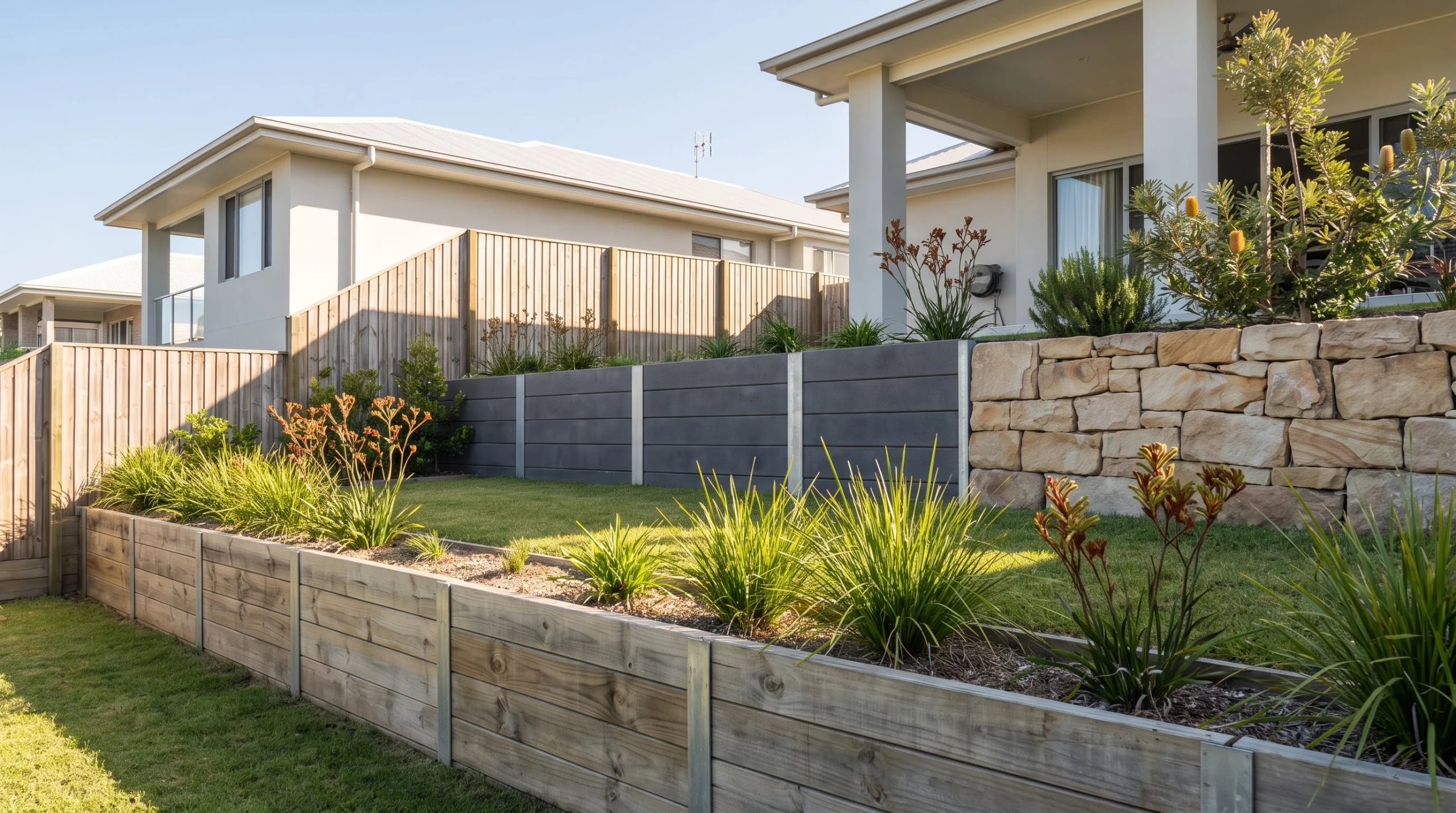
When you start looking at the types of retaining walls available on the Gold Coast, timber sits alongside concrete retaining walls, rock retaining walls, block walls, and stone retaining options as one of the more popular residential choices. Each material suits different situations, and retaining walls are made to solve different problems depending on the site. Timber retaining walls are designed to hold soil on sloping or tiered blocks while adding a natural, garden-friendly aesthetic that harder materials don’t always deliver.
Retaining walls combine structural function with landscape appeal, and for many homeowners on the Gold Coast, timber is the material that best achieves both. Whether you’re looking at a simple garden edge or a retainer wall that holds a significant level change, understanding what timber can and can’t do will help you make the right call.
What Types of Timber Are Used in Retaining Wall Construction?
Not all sleeper retaining walls are the same, and the material you choose makes a real difference to durability and lifespan. There are two main options you’ll encounter when looking at retaining wall installation on the Gold Coast.
Treated Timber Sleepers
Treated timber is the most affordable option and the one you’ll see most often in residential landscape projects across QLD. Pressure-treated with preservatives to resist rot and termites, it suits smaller walls and low garden walls well. In a well-drained environment, treated timber sleepers can perform reasonably well for a number of years. The trade-off is longevity: in coastal Queensland conditions, with the humidity, heat cycles, and seasonal heavy rain, treated timber tends to degrade faster than hardwood alternatives.
Hardwood Sleepers
Hardwood sleepers, typically recycled or new ironbark, spotted gum, or similar dense Australian timbers, offer significantly better durability. They’re heavier, harder to work with, and cost more upfront, but they stand up to the Gold Coast climate far better. If you want timber walls that are built to last, hardwood is worth the extra investment. Expert craftsmanship in the selection and installation of hardwood sleepers makes a real difference to long-term performance, and it’s where expertise in retaining wall construction genuinely shows.
How Long Do Timber Retaining Walls Last?
This is the question most homeowners ask, and the honest answer is: it depends. A treated timber wall in a shaded, well-drained garden might last 10 to 15 years. A hardwood sleeper wall built correctly with proper drainage behind it can push 20 to 25 years in the right conditions. What shortens the lifespan more than anything isn’t the timber itself, it’s moisture. Ensuring your retaining wall has adequate drainage from day one is the single most important factor in how long it performs.
Gold Coast summers bring heavy rainfall and humidity that other parts of Australia simply don’t see. That combination accelerates timber decay and puts pressure on wall systems from the ground up. A properly built wall includes drainage aggregate, a slotted pipe, and weep holes to move water away from the retained soil. Without those, you’re shortening the wall’s life significantly and increasing the risk of soil erosion behind and around the structure.
What Do Timber Retaining Walls Cost on the Gold Coast?
The overall cost of a retaining wall varies depending on height, length, site access, soil conditions, and the material itself. As a general guide for Gold Coast properties:
| Wall Type | Approximate Cost Per Lineal Metre |
| Treated timber sleepers | $250 to $400 |
| Hardwood sleepers | $350 to $550 |
| Concrete sleepers (for comparison) | $400 to $650 |
These are indicative ranges only. Smaller walls on flat blocks with easy access will sit toward the lower end. Taller walls on steep blocks with difficult access, poor soil, or engineered retaining requirements will cost considerably more. For a detailed breakdown of what drives retaining wall cost on the Gold Coast, the article on retaining wall pricing is worth reading before you get a free quote from any builder.
When Are Timber Walls the Right Choice?
Timber walls offer a natural aesthetic that integrates with landscaping in a way concrete retaining walls, block walls, and rock walls simply don’t replicate. Walls are ideal for residential garden settings where the goal is a soft, natural finish, and they’re well suited to properties where the retaining wall that adds the most value is one that blends into the landscape rather than dominates it.
Timber is a good fit when:
- The wall is low to medium height: under 1.2 metres is the sweet spot for sleeper walls
- The site has good natural drainage or drainage can be easily installed
- The landscape goal is a natural, garden-integrated look
- Budget is a genuine constraint and a lifespan beyond 15 years isn’t the priority
- The area is a raised garden bed or soft landscape zone rather than a structural support wall
Walls that need to hold significant loads, handle consistently wet soil, or provide long-lasting structural support are generally better suited to concrete sleeper retaining walls, retention walls, or other high-quality retaining wall options. Whether you’re weighing up timber against concrete or stone blocks, the comparison between concrete sleeper and timber retaining wall types is covered in detail in the article on concrete sleeper vs timber retaining walls.
Common Mistakes That Shorten the Life of Timber Walls
A lot of timber walls that fail early across the Gold Coast fail for the same reasons. Walls may deteriorate quickly not because of the timber species, but because of how the wall is built and what happens to water once it’s in place. Whether you need a simple garden edge or a reliable retaining wall on a steep block, the construction approach matters as much as the material.
The most common issues are:
- No drainage behind the wall, so water builds up and timber stays permanently damp
- Posts set without adequate depth, which leads to lean and failure in taller walls
- Treated timber used in situations that really needed hardwood sleepers
- Walls built too close to trees with aggressive root systems
- No allowance for the wall to breathe and dry out between rain events
Getting drainage right is the single biggest thing you can do to protect your property and ensure your retaining wall is built to perform long term. Retaining walls provide the best return when drainage is treated as part of the wall system, not an afterthought. The guide to retaining wall drainage on the Gold Coast covers what proper drainage looks like and the most common failure points.
Frequently Asked Questions
Do timber retaining walls need council approval on the Gold Coast?
Walls over one metre in height generally require a building approval in Queensland, though there are exceptions depending on your site, proximity to boundaries, and whether the wall is associated with other structures. For anything structural or close to a boundary, check with Gold Coast City Council or your retaining wall builder before starting work.
Can I build a timber sleeper retaining wall myself?
For low garden walls under 600mm, a confident DIYer with the right tools can make it work. Anything taller involves post depths, drainage systems, and load considerations that are worth leaving to a professional. Whether you’re tackling a small garden edge or looking to build a retaining wall on a sloping block, walls that need engineering or sit close to boundaries should always go through a licensed retaining wall builder.
How do I know when a timber retaining wall needs replacing?
The signs are usually visible: timber that’s soft or spongy when pressed, posts leaning or cracking at ground level, sections bowing outward, or soil visibly moving behind the wall. If you spot any of those, get a professional eye on it sooner rather than later. Retaining wall repair at that stage is always more straightforward than waiting for a full collapse during the next heavy rain.
Is treated timber safe near vegetable gardens?
Modern treated timber in Australia uses copper-based preservatives. Current treatments are generally considered safe for garden use, but if you’re growing edibles in raised garden beds right up against the timber, using hardwood or lining the inside of the wall is a reasonable precaution many homeowners take.
Get a Free Quote from Gold Coast Retaining Wall Builders
Timber retaining walls can be a great fit for the right property and the right situation. The key is going in with realistic expectations about lifespan and making sure the wall is built with proper drainage from the start. A well-built sleeper retaining wall that’s correctly drained will give you years of solid service and a result that looks genuinely at home in any Gold Coast landscape.
Whether you’re ready to get a free quote or just want advice on whether timber is the right call for your block, give the team at Goldie Retaining Walls a call on 0411 850 390. As trusted retaining wall specialists and builders on the Gold Coast, we design and build retaining wall solutions that are made to handle what Queensland throws at them. Gold Coast retaining wall experts who know the local conditions and build walls that last: that’s what we do every day (couldn’t resist the plug).