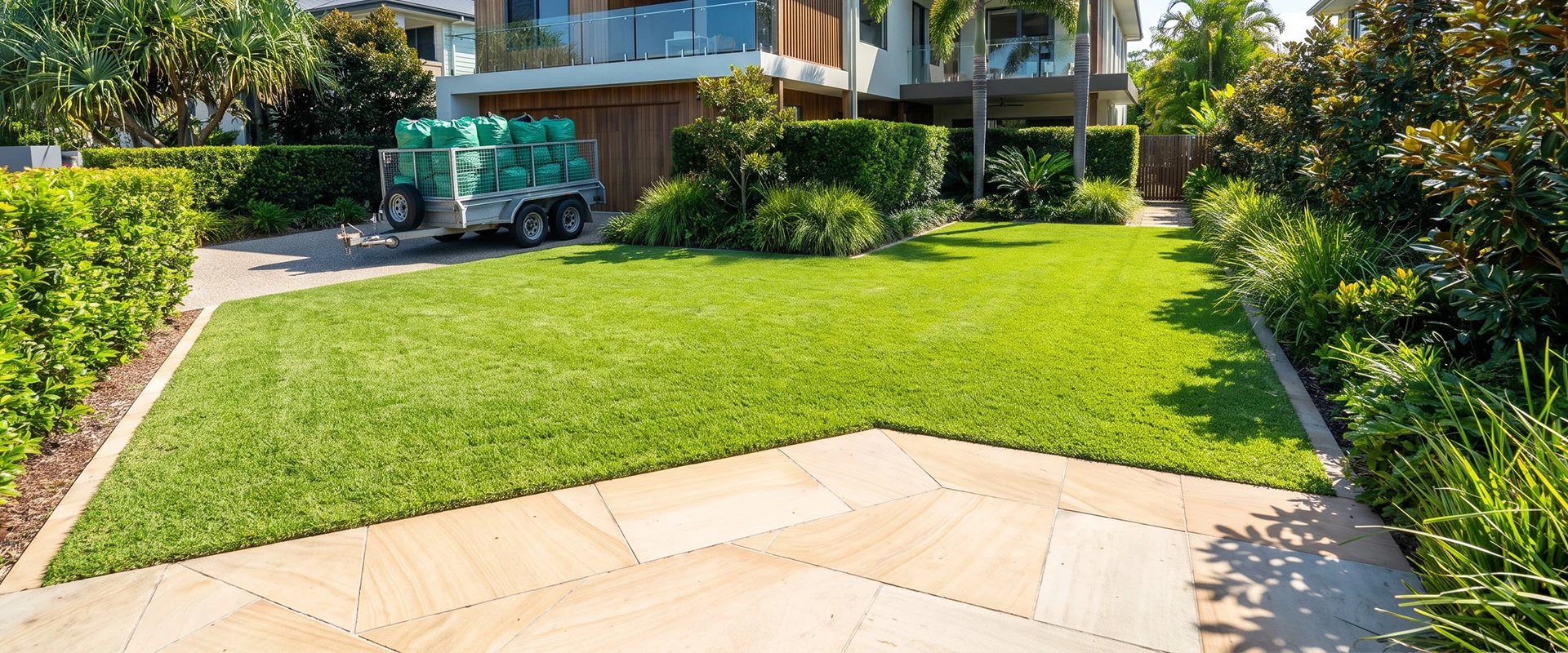
The Gold Coast’s mix of sandy soils, humidity, and sloping coastal blocks makes choosing the right retaining wall material critical. Both concrete sleeper and block retaining walls are popular, but which is best for your site?
Let’s compare the two in terms of strength, cost, and long-term maintenance.
Concrete Sleeper Retaining Walls
Strength and Longevity
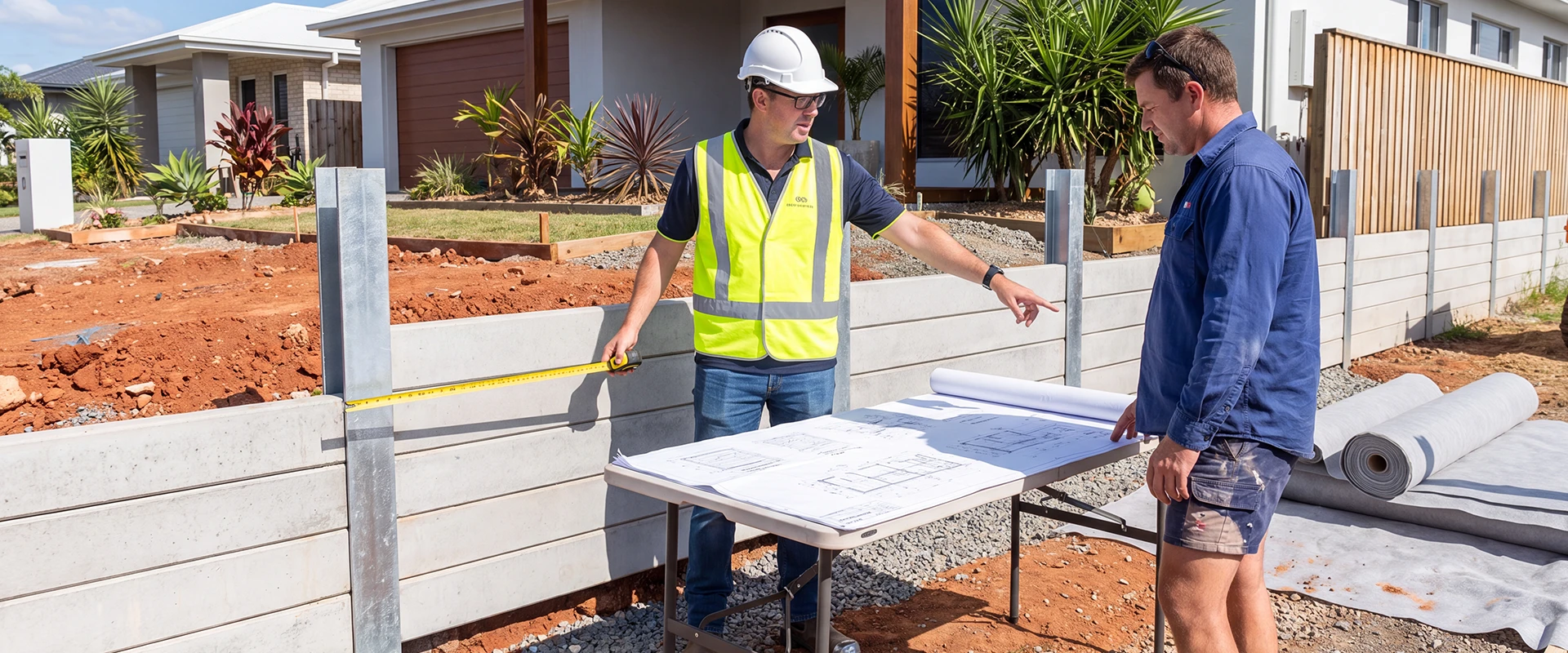
Concrete sleeper walls are built to last. They’re (often) reinforced with steel (and most be when they’re over 1m high) and perform exceptionally well in coastal air. Unlike timber, they won’t rot, warp, or fade from humidity.
Low Maintenance
Once installed, concrete sleepers need virtually no upkeep. They’re ideal for homeowners who want to build once and enjoy for decades.
Design Flexibility
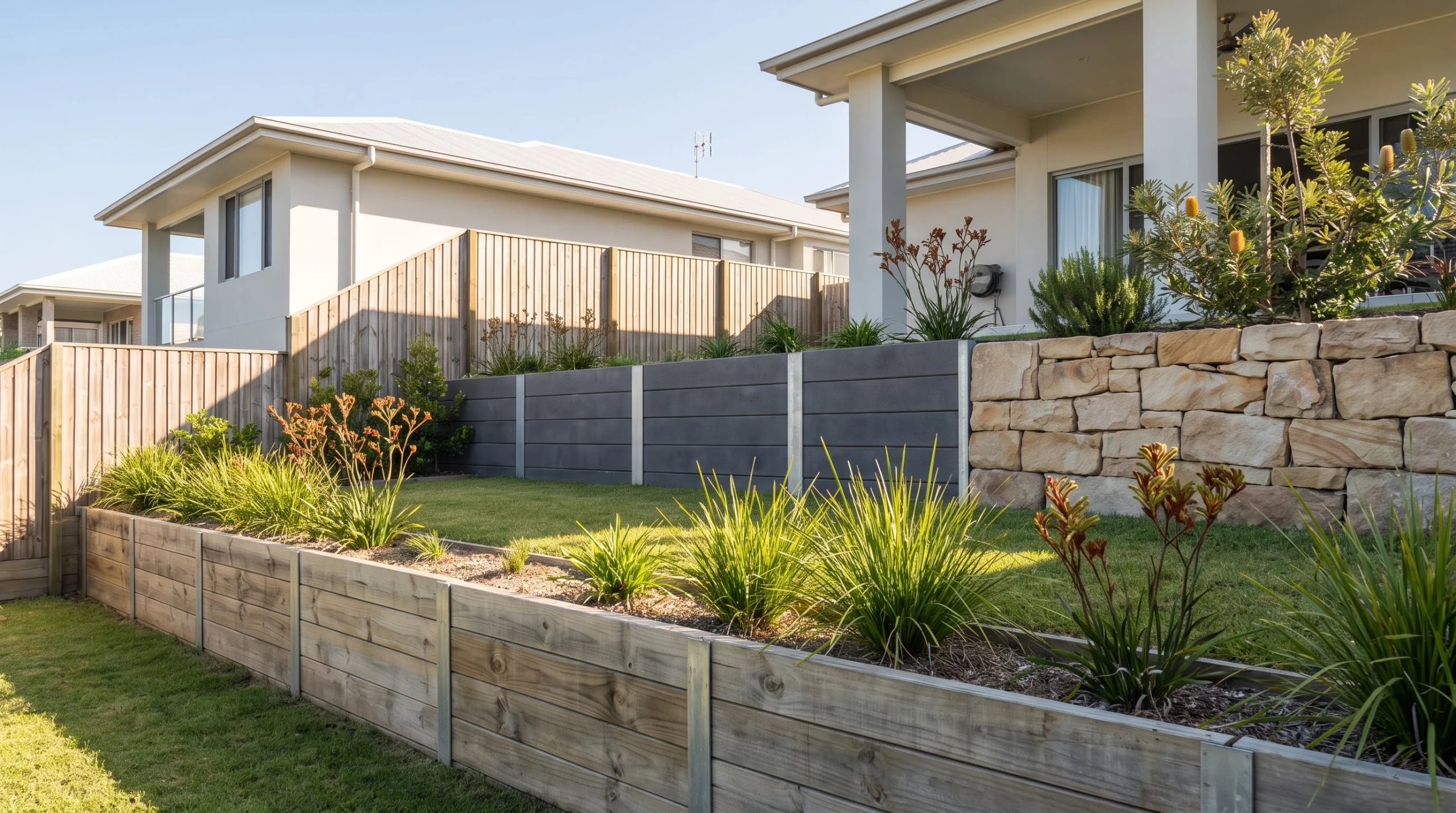
Modern sleepers come in multiple colours and textures. You’ll find them in stone, charcoal, timber-grain finishes. Great news really, because you’ve got the flexibility to have a good looking wall able to complement both residential and commercial landscapes. These days they can be a thing of beauty.
Pro tips about concrete sleeper retaining walls:
Not all concrete sleeper retaining walls are reinforced with steel.
- Standard domestic sleepers (under 1 m high) are often plain concrete or lightly reinforced only for handling.
- Once a retaining wall exceeds 1 m in height (is load-bearing or near a boundary), it must be engineered. This generally includes steel-reinforced sleepers and structural posts set in concrete footings.
Block Retaining Walls
Modular Design Appeal
Now of course, with blocks you have more than just aesthetic flexibility. You have more freedom to shape and style to your advantage. Block walls use interlocking concrete blocks that can curve or step easily. This attribute makes them perfect for creative landscapes and multi-tiered gardens.
Cost-Effective for Smaller Jobs
For smaller retaining needs (under 1.2m), block systems can be installed faster with less labour.
Limitations
Block walls rely on correct base compaction and backfill drainage. In poorly drained sandy soils, they can shift over time if not engineered correctly.
Gold Coast Considerations
When you’re building retaining walls on the Gold Coast, you really need to think about:
- Soil: Coastal soils drain quickly but they do shift easily. So, think reinforced concrete systems.
- Moisture: Humidity can deteriorate unsealed blocks faster than concrete sleepers.
- Aesthetics: While blocks offer more design creativity, sleepers provide a sleek, structural look.
FAQs: Concrete vs Block Retaining Walls (Gold Coast)
Which is cheaper, concrete or block walls?
Block walls usually cost less for small projects, but concrete sleepers offer better long-term value.
Which lasts longer in coastal conditions?
Concrete sleeper walls typically last 25–40 years with minimal maintenance.
Can block walls handle heavy loads?
Yes, when they’re engineered correctly block walls can cope being heavily loaded. However, sleepers are preferred for higher, structural applications.
What’s better for canal or beachfront blocks?
Concrete sleepers suit properties close to water. They resist moisture, salt, and soil movement better than modular block walls.
Build It Strong and Stylish
Both sleepers and concrete blocks can be very attractive options. It doesn’t matter if you’re after the clean look of concrete sleepers or the flexibility of block systems, Goldie Retaining Walls can design, engineer, and install walls that handle the Gold Coast climate.
Book a Free Site Assessment today and get expert advice on the best wall for your property.
Final word from Gold Coast Council
Here’s what the council says: “Retaining walls need building approval, unless they are less than 1.0 metre high, further than 1.5 metres to a building or another retaining wall, only support the soil behind the wall, are not part of a pool fence, are not built over a service, etc.”